
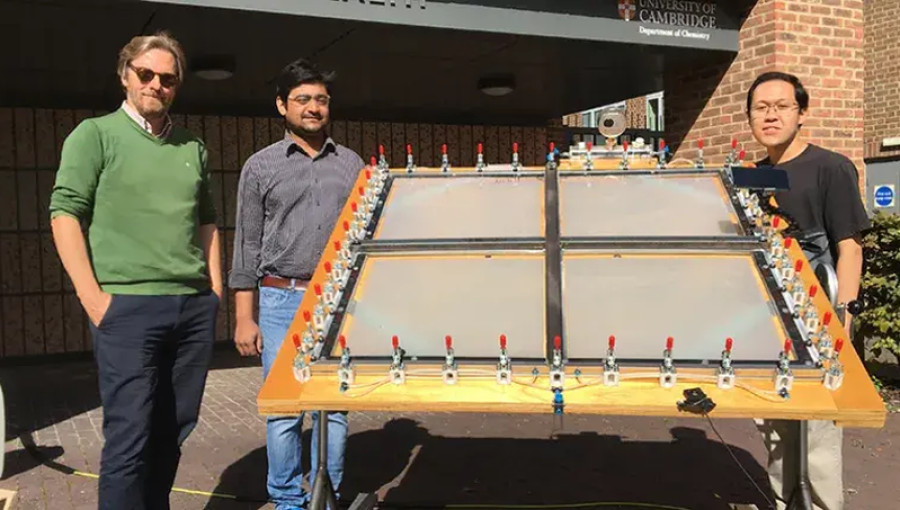
Researchers at the University of Cambridge have successfully scaled up a solar-powered technology capable of transforming plastic waste into clean hydrogen fuel and industrial chemicals. While previous iterations of this innovation were confined to small-scale laboratory settings, the team has now demonstrated the system’s viability in real-world, outdoor conditions. By transitioning from a compact 25-centimeter square reactor to a one-meter square device, the scientists have proven that this sustainable process can function effectively under natural sunlight. This milestone marks the first time such a scalable approach has been validated outside of a controlled indoor environment.
The technology utilizes solar energy to break down common plastic waste, such as discarded beverage bottles, and convert the material into useful chemical products. By moving the reactor out of the lab and onto the grounds of the university’s Chemistry Department, the researchers have established a practical roadmap for commercial implementation. This development represents a significant step forward in addressing plastic pollution while simultaneously generating renewable hydrogen fuel. The ability to operate at a larger scale under natural light conditions is essential for the technology to eventually provide a meaningful, sustainable solution for waste management and energy production.