
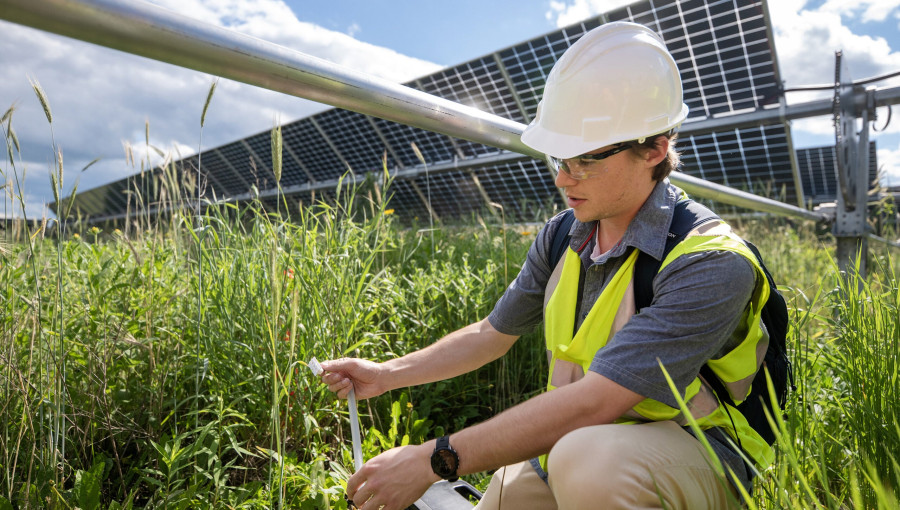
Researchers at the University of Wisconsin-Madison are investigating whether agricultural land can simultaneously host utility-scale solar arrays and food production. The Kegonsa Research Campus, which recently entered its second season, utilizes a 17-acre site featuring over 5,400 solar panels to study agrivoltaics. By analyzing variables like soil carbon, water cycles, and crop growth under the shade of solar modules, scientists aim to determine how to integrate renewable energy generation with farming. This project seeks to address concerns regarding land use by demonstrating how solar infrastructure can coexist with livestock grazing and crop cultivation.
The facility, which began operations in 2025, is designed to remain active for 25 years, providing a long-term data set for academic publication. The site is uniquely equipped with specialized flux towers reaching up to 100 feet, which monitor wind patterns, moisture levels, and the exchange of gases between the earth and the atmosphere. These measurements are critical for understanding how the physical presence of solar arrays alters the local environment and agricultural productivity. Beyond its research objectives, the installation serves a practical purpose by generating enough electricity to power approximately 1,000 homes.
Ankur Desai, chair of the department of atmospheric and oceanic sciences at UW-Madison, emphasizes that the project is focused on utility-grade solar arrays that must meet significant grid demands. Because these installations require substantial space, the research team is carefully evaluating how panel spacing and layout affect farming operations. By engaging with the agricultural community through outreach programs, the researchers hope to provide farmers with actionable insights into how agrivoltaics might offer new opportunities. As global energy demand rises, the team views solar power as a vital component of the energy transition, provided it can be implemented sustainably alongside food production.