
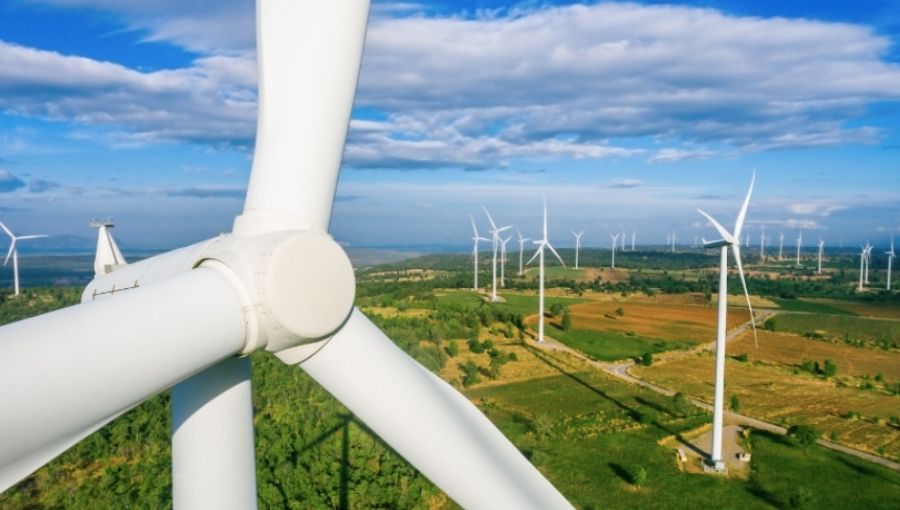
London and New York, March 17, 2025 – Global wind turbine installations hit a record 121.6 gigawatts (GW) in 2024, according to a new report from BloombergNEF (BNEF). Rapid growth in mainland China accounted for the largest share of this increase. Of the global additions, 90% were onshore wind turbines (109.9 GW) and 10% offshore (11.7 GW).
Chinese Manufacturers at the Top
Chinese manufacturers have become the biggest players in the global market, with China-based companies taking the top four spots. Goldwind continued to lead with 19.3 GW, Envision came second with 14.5 GW, Windey third with 12.5 GW and Mingyang fourth with 12.2 GW. Denmark’s Vestas completed the top five with 10 GW of installations.
Chinese manufacturers remain heavily dependent on their domestic market, while European and US producers appeal to a wider customer base.
Continued Decline in the US
The US wind market contracted for the fourth consecutive year to 5.4 GW. This is the lowest level in a decade. Factors such as longer turbine delivery times, shortages of transformers and electrical equipment, and high interest rates have slowed projects.
Oliver Metcalfe, BloombergNEF’s head of wind research, said onshore wind projects have bipartisan support and remain economically attractive, but offshore projects could face more political pressure under Donald Trump’s presidency.
Siemens Gamesa Takes the Lead in Offshore Wind
Siemens Gamesa has returned to the lead in offshore wind turbine supply, overtaking Vestas and its Chinese competitors for the first time since 2020. The company supplied almost three-quarters of projects outside mainland China, adding 4 GW and doubling its capacity compared to 2023.
In 2024, global offshore wind capacity increased by 6% to 11.7 GW. China accounted for more than half of global additions with 6.1 GW and remained the largest offshore market. However, due to project delays in the country, the pace of additions fell by 1.6 GW compared to 2023.
BNEF notes that there is no strong player in the Chinese market, but seven companies have made major additions. While China’s rise in the global wind market continues, producers in the US and Europe face new political and economic challenges.