
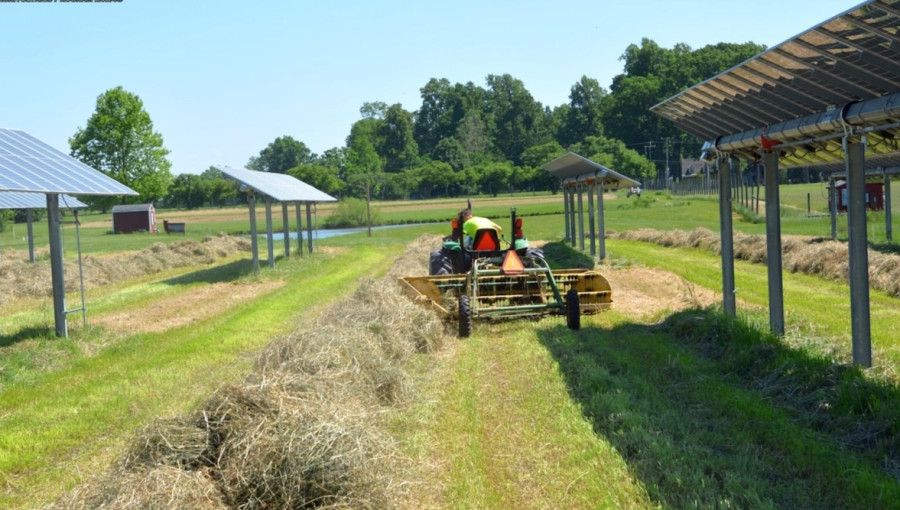
This year, despite shifts in federal energy policies, the movement toward agrivoltaics—combining agriculture with solar energy—continues to gain traction across the United States. The North American Agrivoltaics Awards (NAAA) program highlights this shift from experimental projects to an industry with the potential to create jobs and enhance farm productivity. Agrivoltaics enables land to be used for both agricultural and solar energy production, offering farmers additional revenue while also contributing to clean energy generation.
The agrivoltaic approach, also known as solar farming, allows for the cultivation of crops and livestock under and around solar panels. Farmers can either lease their land to solar companies or install their solar units to reduce electricity costs. This innovative practice also encourages the development of ecological projects, such as pollinator habitats, within solar farms that benefit both agriculture and natural ecosystems. Notably, organizations supporting agrivoltaics are growing, with the annual Solar Farm Summit serving as a platform to showcase advancements in the industry.
At this year’s summit, held in Chicago, the NAAA celebrated innovative agrivoltaic projects addressing various regional challenges, including climate change and food accessibility. The Solar Farm of the Year was awarded to initiatives from Rutgers University and the Spaces of Opportunity community farm in South Phoenix. Rutgers’ focus on balancing agricultural productivity with renewable energy has garnered support from New Jersey’s agricultural community, where they operate research farms to explore the feasibility of integrating solar energy with traditional farming methods.
In addition to the successes seen in New Jersey, the Spaces of Opportunity project stands out for its efforts to alleviate food deserts. By utilizing solar energy, the project grows produce that is given to local food banks and schools. This collaboration with the USDA illustrates the project’s commitment to enhancing local food security while also studying the environmental impacts of agrivoltaic practices.
Competition in the agrivoltaics sector is fierce, with a variety of innovative projects nominated for recognition. These include a solar fence system in Colorado that supports row crop production, a microgrid in Oregon focused on growing heat-sensitive crops, and a solar-powered community farm in Detroit that facilitates urban agriculture while decarbonizing municipal infrastructure.
As agrivoltaics becomes a more prominent solution for farmers enduring the pressures of climate change and economic challenges, emerging projects in states like Virginia, Wisconsin, and Washington highlight the ongoing research and development in this space. Despite the uncertain political landscape for energy policies, agrivoltaics represents a promising pathway for sustainable agriculture and renewable energy in the U.S.
These advancements in agrivoltaics come amidst criticism of traditional energy sources such as coal, which have been heavily promoted by the current administration. The challenges faced by farmers, including rising costs and diminishing support for clean energy projects, underline the importance of innovation in agriculture and energy to sustain livelihoods and combat climate impacts. As agrivoltaic solutions proliferate, farmers and stakeholders are urged to engage with lawmakers to foster legislative support for the sustainable energy initiatives vital to agricultural resilience.