
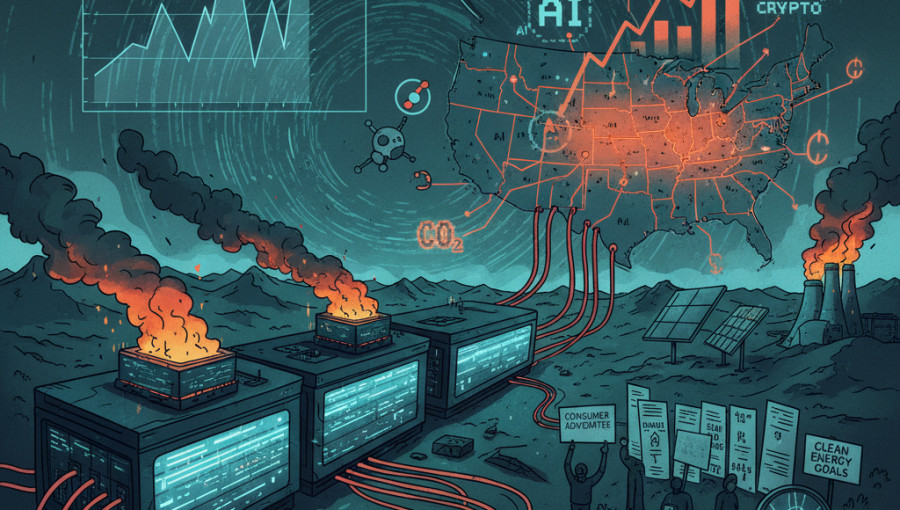
A recent analysis reveals that projected electricity demand in the United States is soaring to potentially unsustainable levels, primarily fueled by the explosive growth of data centers for artificial intelligence. Over the next five years, utilities anticipate a surge in power needs equivalent to 15 times the peak load of New York City. A new report cautions that these forecasts may be significantly inflated, yet utilities are already planning massive infrastructure investments, often in fossil fuels, which could drive up consumer costs and increase CO2 emissions unless carefully managed by regulators.
According to a report from the consultancy Grid Strategies, U.S. utility forecasts for peak grid demand are expected to reach 166 gigawatts by 2030, a sixfold increase over projections made just three years ago. The vast majority of this growth, approximately 90 gigawatts, is attributed to the development of new data centers. This boom is driven by tech giants investing heavily in AI, alongside substantial needs from cryptocurrency mining, cloud computing, and other IT services. John Wilson, lead author of the report, described the figures as “phenomenal” for an industry accustomed to much slower growth.
Despite these staggering projections, the report suggests a degree of caution is warranted. Grid Strategies found that utility forecasts might be overstating future data center demand by as much as 40 percent. This potential exaggeration stems from developers proposing the same project to multiple utilities to find the best terms, as well as the speculative nature of many proposed facilities that may never be built. This uncertainty is particularly significant given the emergence of “gigawatt-scale” data centers, each consuming as much power as a small city, where a single cancellation could have major implications for grid planning.
The high-end forecasts are already being used by utilities to justify major investments in new power plants and grid infrastructure. This has led to immediate financial consequences for consumers in some areas. In the PJM Interconnection, the nation’s largest energy market, future data center demand has caused capacity costs to skyrocket from $2.2 billion in 2023 to a projected $16.1 billion for the upcoming summer. The resulting higher utility bills have become a potent political issue, influencing recent election outcomes in states like New Jersey and Virginia.
To meet this anticipated demand, many utilities, particularly in the Southeast and Midwest, are planning to build numerous new natural gas-fired power plants. In Virginia, home to the world’s largest data center hub, Dominion Energy’s proposal for new gas plants is seen by critics as a threat to the state’s 2045 fossil fuel phaseout goal. Similarly, in Georgia, Georgia Power is seeking approval for new gas capacity to serve data centers, sparking fears of rising bills and leading to the election of new public service commissioners who campaigned on constraining utility spending.
In response to these challenges, states and grid operators are exploring new strategies to manage the growth without overwhelming the power grid or consumers. Texas, the second-largest data center market, passed a law requiring new large facilities to disconnect during periods of peak grid stress. Other states are considering regulations that would force developers to cover the costs of new infrastructure. Some data center companies are also exploring ways to shift their power usage to off-peak hours. The Grid Strategies report ultimately underscores that regardless of the final demand, significant grid expansion is necessary, and it calls on regulators to ensure the costs are not unfairly passed on to everyday customers.