Architects Unveil Mile High Vertical Farm For Chicago
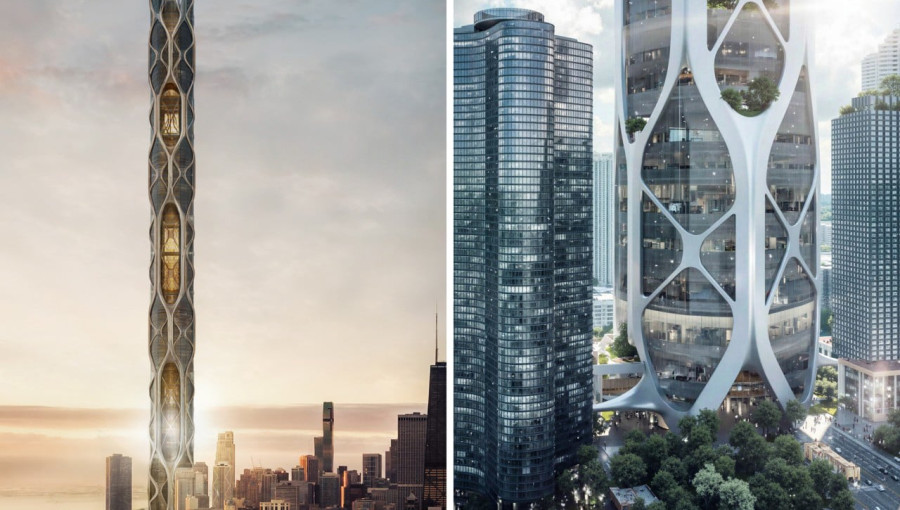
Architects Yuhan Zhang and Dreama Simeng Lin have unveiled Eden Rise, a revolutionary 1.6-kilometer-high vertical community concept designed to transform Chicago’s skyline. This eco-conscious tower aims to eliminate urban food deserts by integrating vertical farms directly into its residential core. Beyond agriculture, the structure utilizes cloud harvesting and wind energy to create a self-sustaining ecosystem. By combining housing, education, and recreation within a single organic structure, Eden Rise proposes a future where high-density urban living fosters environmental healing and social equity.
Chicago’s architectural legacy may soon face its most ambitious challenge yet with the introduction of Eden Rise. Moving beyond the traditional concept of a skyscraper as a mere office or residential block, this proposal reimagines the city skyline as a living, breathing organism. The project specifically targets the systemic issue of food deserts in Chicago’s low-income neighborhoods, where access to fresh produce is often hindered by economic and geographic barriers.
The tower’s primary innovation lies in its "farm-to-floor" model. By embedding sophisticated vertical farms throughout the 1.6-kilometer structure, residents can access nutritious food grown just meters away from their front doors. This eliminates the carbon footprint associated with long-distance food transportation and ensures year-round food security. The design, inspired by the fluid aesthetics of a water droplet, serves as a vertical extension of the city’s natural green spaces, symbolizing life and renewal.
Inside, the structure functions as a condensed "city in the sky." It integrates residential units with offices, schools, and hotels, effectively removing the need for long daily commutes. To maintain a connection with the outdoors at extreme heights, the architects included numerous sky terraces. These elevated parks serve as communal hubs, providing fresh air and natural light while supporting the mental well-being of the inhabitants in a dense vertical environment.
Technologically, Eden Rise is designed to be a self-sufficient entity. The exterior features an advanced exoskeleton equipped with wind turbines and cloud harvesting systems to generate renewable power and recycle atmospheric moisture. A central void and a breathable atrium facilitate natural ventilation, significantly reducing the energy required for climate control. This integration of green technology allows the building to function like a living body, where each system supports the whole.
The engineering behind the vision is as complex as its ecological goals. The structure consists of four conjoined towers reinforced by layered bracing systems. A diagrid pattern spans multiple stories, weaving a network of structural lines that balance immense strength with aesthetic elegance. This framework allows light and air to travel deep into the building’s core, ensuring that the interior remains vibrant and healthy for all residents. By merging architecture with ecosystemic intelligence, Eden Rise serves as a manifesto for a more equitable and sustainable urban future.