Tokyo Unveils Worlds Largest Floating Offshore Wind Farm
The Tokyo Metropolitan Government has unveiled a landmark project to develop the world’s largest floating offshore wind farm near the Izu Islands, targeting a 1-gigawatt capacity by 2035. This ambitious initiative aims to supply renewable energy to both the islands and mainland Tokyo, representing a tenfold increase over current global leaders in floating wind technology. While the project aligns with Japan’s 2050 net-zero goals, it faces significant hurdles, including high installation costs, logistical complexities, and skepticism from private investors regarding long-term profitability.
Announced by Governor Yuriko Koike at the COP29 summit, the proposed wind farm will span a quintet of island communities, including Oshima, Niijima, Kozushima, Miyake, and Hachijo. With a planned output of at least 1 gigawatt, the facility would generate power roughly equivalent to a standard nuclear reactor. Currently, Norway holds the record for the largest operational floating farm, though its output remains below 100 megawatts. Tokyo’s vision seeks to leapfrog existing technology to establish a massive renewable energy hub in the Pacific.
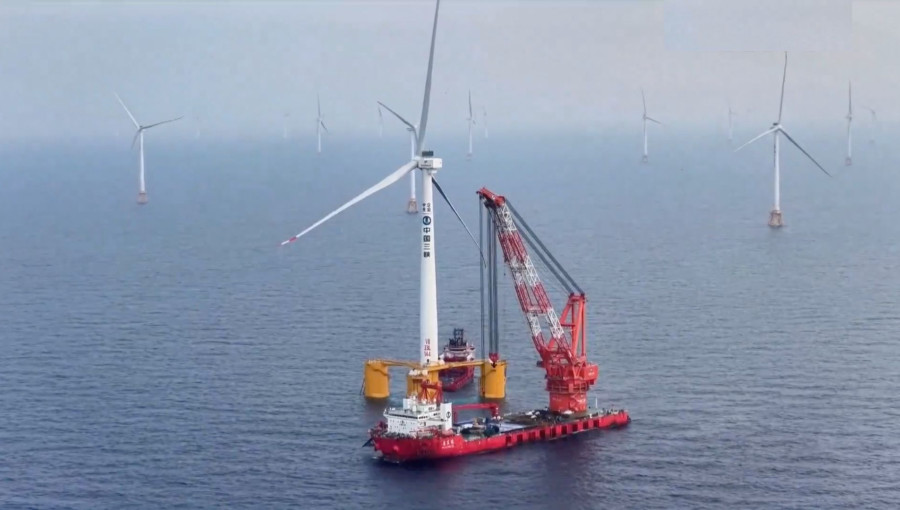
To advance the project, the Tokyo Metropolitan Government has significantly increased its fiscal 2026 budget to 2.7 billion yen (approximately $17 million). These funds are earmarked for extensive field surveys, including seabed topography mapping and meteorological studies to analyze local wind patterns. Unlike traditional "bottom-fixed" wind farms that require intensive seafloor excavation and pile-driving, this project will utilize floating platforms secured by a complex system of mooring lines and anchors. This design is considered more environmentally friendly as it minimizes disruption to the marine ecosystem during installation.
The energy captured by these floating giants will be converted into electricity and transmitted to the mainland and local island grids via high-voltage subsea cables laid directly along the ocean floor. Despite the technological promise, the path to the 2035 completion date remains challenging. The Izu region is currently classified only as a "preparation zone," the earliest stage of development in Japan’s regulatory framework. Industry experts note that offshore projects typically require over a decade to move from conception to operation, leading some critics to view the current timeline as overly optimistic.
Furthermore, the private sector has expressed caution. Recent withdrawals from other Japanese wind projects by major corporations highlight concerns over rising material costs and the impact of a weaker yen. Analysts also point out that while the capacity may match a nuclear reactor, the actual energy yield from wind is typically lower due to a capacity factor of approximately 40 percent, compared to the 80-90 percent seen in nuclear power. Nevertheless, the project remains a strategic cornerstone of Japan’s national mandate to achieve 45 gigawatts of offshore wind capacity by 2040.