Artist James Bridle Explores Solar Energy Through Ancient Natural Imagery
The artist uses functional photovoltaic panels to bridge the gap between contemporary energy technology and ancient biological and cultural systems.
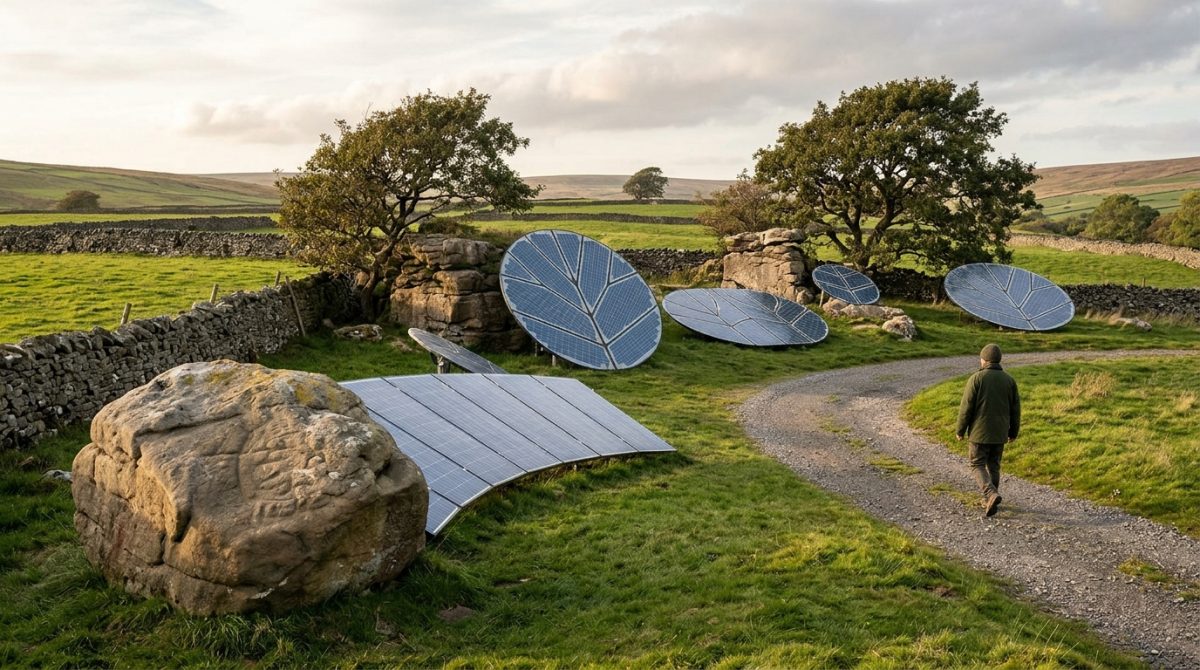
Artist and technologist James Bridle has created functional solar installations that integrate microscopic natural imagery with modern energy generation. The 2022 project, Solar Panels (Radiolaria Series), features five 100W photovoltaic generators etched with the silica skeletons of Radiolaria, a type of zooplankton. By enlarging these intricate, geometric structures, the work highlights the sophisticated energy-capturing capabilities inherent in non-human organisms.
Bridle’s work often examines the intersection of technology, nature, and human intelligence. By juxtaposing advanced solar electronics with the ancient, symbiotic logic of single-celled organisms, the artist questions the definition of innovation. The project suggests that while solar panels provide a sustainable alternative to fossil fuels, they rely on complex logistics to achieve processes that nature has performed for thousands of years.
In 2023, Bridle expanded this exploration with an installation titled Things Said, Things Seen, and Things Done at the archaeological site of Elefsina in Greece. This project utilized three 100W solar panels engraved with symbols representing the ancient cult of Demeter, including a wheatsheaf, a poppy, and a calathus. These panels provided power for the installation, serving as a ritualistic demonstration of how renewable energy technology can be integrated into cultural and historical contexts.
Through these installations, Bridle advocates for a more reciprocal relationship between humanity, technology, and the natural world. The artist encourages a shift away from human exceptionalism, proposing that future progress should be founded on ecological interdependence and the recognition of sophisticated knowledge systems existing beyond human invention.