
The automotive industry is witnessing a significant decrease in battery prices, with current costs for LFP and NMC battery cells at €54 and €58 per kilowatt-hour, respectively. This sharp decline from more than double these prices three years ago highlights the trend toward more economically viable electric vehicles (EVs). As battery prices are expected to drop further by 10 to 15% by 2030, the industry anticipates a fivefold increase in battery demand by 2035, primarily driven by electric vehicles. Companies like Volkswagen are adapting their strategies to optimize pricing while ensuring profitability in a rapidly changing market.
In a recent discussion with Ines Miller from P3 Group, it was revealed that the automotive sector now spends approximately €54 per kWh for LFP batteries and €58 per kWh for NMC batteries. This is a dramatic reduction from three years ago when prices soared due to lithium shortages, with LFP batteries then costing €127 per kWh and NMC batteries at €140 per kWh. The continued decrease in cell prices suggests that the transition to electric vehicles is not only ecologically necessary but also economically advantageous.
Miller forecasts that battery prices could decline by an additional 10 to 15 percent by 2030, attributed to expanded manufacturing capacities and enhanced production processes. While this news favors battery manufacturers in China, such as CATL and BYD, the outlook isn’t as bright for European producers, as imported cells from China are currently more than 20% cheaper than those produced domestically. P3 anticipates that battery demand will grow from approximately 0.3 TWh annually to around 1.6 TWh by 2035, with a predominant 70% directed toward electric vehicles.
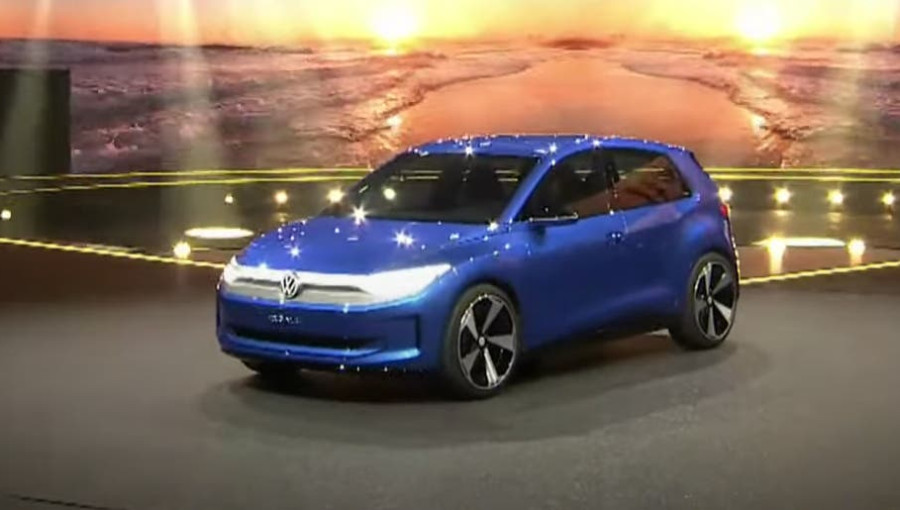
As Volkswagen unveils its small ID.1 model with a price tag of €20,000, battery costs will play a critical role in planning. The option to use a 30 kWh battery or larger ones at higher price points highlights how manufacturers aim to meet consumer needs while balancing profitability. For instance, while increasing the battery to 55 kWh would add €1,250 to manufacturing costs, consumers may be willing to pay an additional €3,000 to €4,000 for increased range, enhancing the vehicle’s market viability.
The article asserts that the automotive industry is beginning to turn a profit on electric vehicles. However, discussions remain about whether profit margins are comparable to those of traditional combustion engine vehicles. Volkswagen aims for its MEB Small platform to mirror the same profitability as its conventional models, positioning the ID.2 and ID.2X to match margins found in their Polo and T-Cross counterparts. There is speculation that premium electric vehicle models with advanced features could ultimately achieve even better profit margins than traditional cars.
The economic dynamics underscore the simplicity of electric drive systems compared to conventional vehicles, which involve complex mechanical components and multiple systems designed for combustion engines. As battery costs evolve, some within the industry caution against perceiving low profitability as permanent, advocating for changes in mindsets rather than wallowing in concerns. The cost of European battery cells, whether produced by local or international firms, has raised alarms about overreliance on Chinese production networks, urging a diversification of supply chains.
The article concludes with exciting developments in battery technology reported by sources such as CATL, which claims that its upcoming sodium-ion batteries, known as Naxtra, could achieve costs below $10 per kWh. These batteries are touted for their operational efficiency across a wide temperature range and a remarkable lifespan of 10,000 charge cycles. If feasible, such advancements might not just improve electric vehicle performance but also signify a shift away from carbon-intensive energy sources, sparking potential disruptions across various sectors as society moves towards sustainable energy solutions.
https://cleantechnica.com/2025/08/21/when-will-battery-prices-fall-by-how-much/