
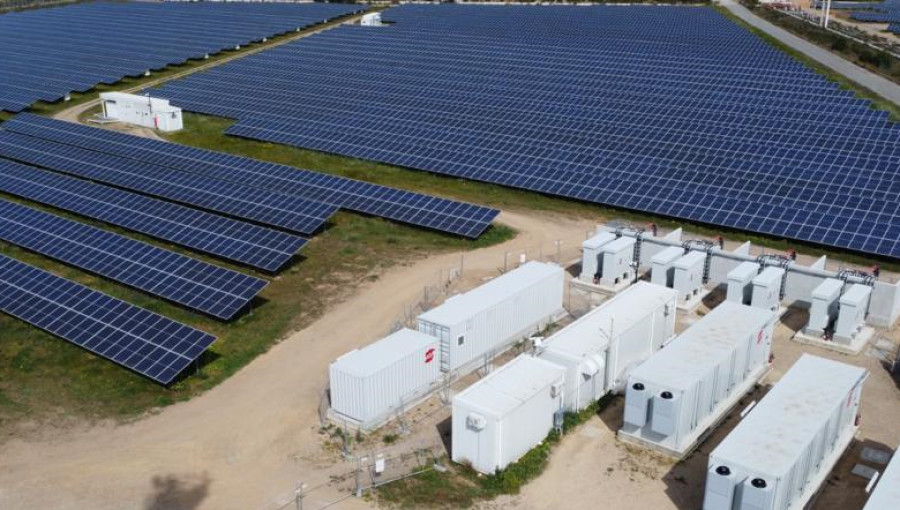
Battery storage is rapidly becoming a key component in the global energy transition, with investments soaring from $1 billion in 2015 to nearly $70 billion today. The European Union’s battery market has also surged, particularly in residential settings, driven by high energy prices and a push for self-sufficiency. However, the commercial and industrial (C&I) sector has struggled with slow growth due to regulatory challenges and limited revenue opportunities. To support this critical technology’s expansion, a comprehensive EU Battery Storage Action Plan is needed, aiming to streamline permits, enhance supply chains, and meet ambitious deployment targets.
Battery storage is the fastest-growing energy technology worldwide and is set to define the trajectory of the energy transformation going forward. Global investments in battery storage went from just $1 billion in 2015 to nearly $70 billion today, according to the International Energy Agency’s World Energy Investment 2025 analysis. This is despite the enormous 80% decrease in average selling battery prices since 2015. Off their radar until recently, policymakers and investors have recognised the central role of batteries for the energy transition. Batteries are the absolute shortcut to delivering flexible and electrified energy systems across the globe. In the EU, the battery revolution started at the small-scale level, in times of crisis (2021-2023). In tandem with solar PV, the growth was driven by skyrocketing power prices and the desire to become self-sufficient, along with significant price reductions.
The energy crisis shock was particularly strong in Germany, which rapidly became the top European market, with a consistent attachment rate of 70+%. From 2020 to 2023, the EU home battery market doubled on a yearly basis and grew 11-fold from 1 GWh installed in 2021 to more than 11 GWh in 2023. Many countries, like the Czech Republic or Italy, provided households with the financial means to acquire solar+storage systems, with attractive CAPEX subsidies or tax incentives. Over the same period, across the EU, large-scale systems were growing quietly, but steadily, increasing their annual market 10-fold. Without clear revenue streams and long permitting and grid connection procedures, project developments were slow and often delayed.
The C&I storage segment, unlike for solar, registered minor growth rates in the early 2020s, with very low attachment rates across the board (below 5%). The key factors were weak regulations, high grid charges, scarce financial incentives, slow permitting, limited industry knowledge, and few ways to combine revenue streams. In light of declining power prices and the phase-out of household support schemes, 2024 showed us yet again how quickly paradigm changes materialise on energy. The residential BESS market registered its first decline in a decade in 2024 (-13%), which, despite being somewhat small, was widely felt across the industry given the high growth expectations of the energy crisis. Still, C&I batteries kept on growing, but remained below their true potential. However, grid batteries finally had a watershed moment, delivering a record high level of installations, 3.5 times more than in 2023. Half was grid-connected in Italy, where projects contracted in past auctions were finally brought online. This is hard evidence that the technology is ready to be deployed at the scale the energy transition requires.
All in all, despite the slowdown, battery systems were again growing to new heights with 18.5 GWh added last year. This leaves the EU with nearly 50 GWh installed, 2/3 of which is residential capacity. To put this into perspective, China has installed almost the same total capacity (53 GWh) only in H1 2025, while the US deployed 15 GWh in the first 6 months of 2025, according to Rho Motion’s grid-scale BESS database. 2025 is poised to become the first year that grid batteries dominate deployment over the residential segment. This trend is expected to continue
https://www.ess-news.com/2025/08/22/its-high-time-for-an-eu-battery-storage-action-plan/