Belgian Spin-off Noak Secures Five Million Euros For Tandem Solar Technology
The funding will support the industrialisation of perovskite-silicon tandem solar cells developed by researchers at imec and Hasselt University.
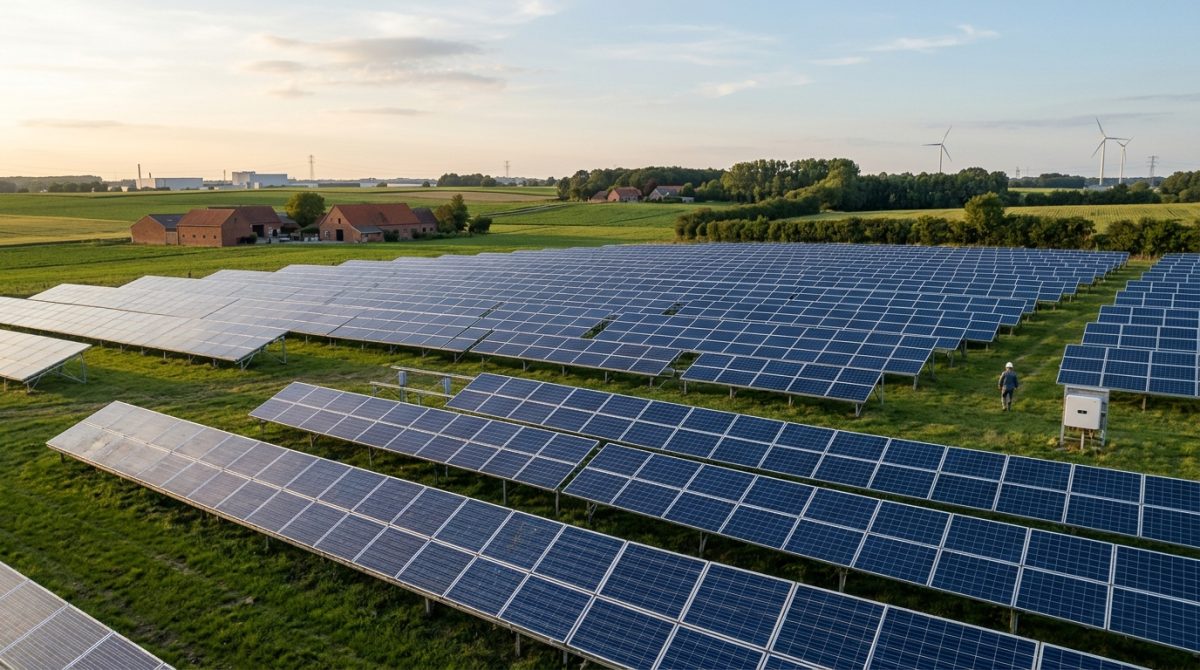
Noak, a new spin-off from the Leuven-based research hub imec and Hasselt University (UHasselt), has successfully raised 5 million euros in seed funding. The capital is intended to scale and industrialise the company's perovskite-silicon tandem solar technology. The investment round was supported by the Helios Foundation, the climate investment firm Nuhma, and V2HFin, a subsidiary of Flemish Energy Holding.
The company's technology is based on over ten years of research conducted at the Institute for Materials Research at the university. The tandem cells feature a proprietary perovskite layer stack and deposition techniques that have undergone five years of outdoor testing across more than ten sites in Asia, Europe, and North America. These trials demonstrated the technology's durability under diverse environmental conditions, including extreme heat, heavy rain, and sub-zero temperatures.
A key component of the Noak architecture is a proprietary 3D woven back-contact foil that integrates electrical connections at the rear of the cell. This design removes the requirement for front-side metallisation, which reduces shading losses and facilitates easier recycling. Additionally, the cell structure can be divided into smaller sub-cells, allowing for greater design flexibility and decreased reliance on rare and expensive metals.
Noak CEO Geert Palmers stated that the company aims to establish a global value chain through industrial partnerships. By avoiding reliance on dominant market dependencies, the firm intends to navigate the challenges of protectionism and global market volatility. The next phase of development will focus on proving the long-term stability and performance of the technology at scale to ensure commercial viability and bankability.