
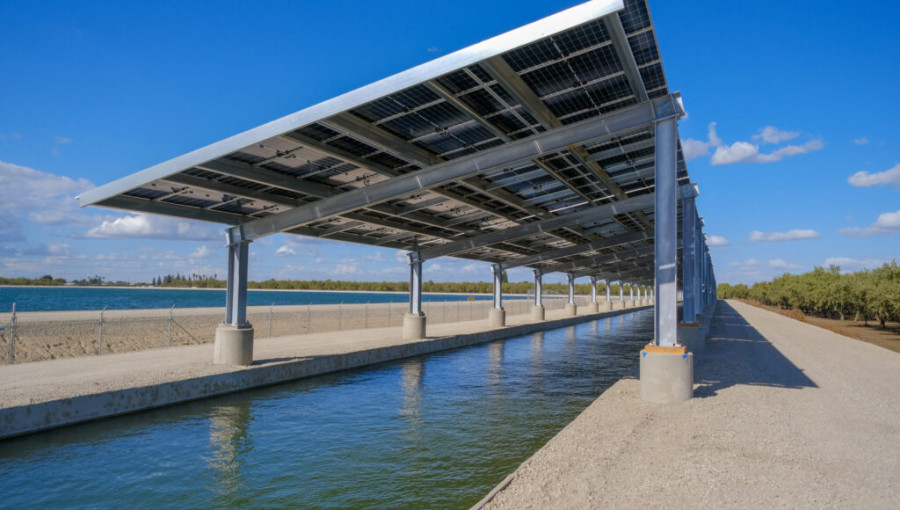
A pioneering California initiative, known as Project Nexus, is testing the placement of solar panels over irrigation canals to simultaneously generate clean energy and conserve vast amounts of water. With a state investment of $20 million, the project aims to address both water scarcity and renewable energy goals. Early projections suggest that if this dual-purpose infrastructure were implemented across the state’s canal system, it could save up to 63 billion gallons of water annually by reducing evaporation, all while producing a significant amount of electricity without occupying valuable farmland.
California has launched an innovative infrastructure project in its Central Valley, installing solar panels over open-air water canals to create the first system of its kind in the United States. The initiative, dubbed Project Nexus, is being tested at two sites along canals managed by the Turlock Irrigation District. The pilot program, which became operational in 2025, is a collaborative effort involving the California Department of Water Resources, Solar AquaGrid, and researchers from UC Merced, who are studying the system’s performance.
The project directly confronts the significant water loss from the state’s 4,000-mile (approximately 6,437-kilometer) network of irrigation canals. By covering the waterways, the solar panels shade the water from direct sunlight, drastically reducing evaporation rates, a critical benefit in a state frequently affected by drought. Researchers estimate that statewide implementation could conserve enough water to supply two million people or irrigate 50,000 acres of agricultural land each year.
The two initial test sites demonstrate the technology on different scales. The first installation, which began generating power in March 2025, spans a canal about 20 feet (6.1 meters) wide. A much larger array, covering a 110-foot-wide (33.5-meter) canal, came online in August 2025. Combined, these installations have a capacity of 1.6 megawatts, sufficient to power approximately 1,200 homes. The smaller site is also equipped with a battery storage system to hold excess electricity for later use.
Beyond conserving water and generating renewable energy, the project offers several environmental advantages. Shading the canals keeps the water cooler, which can benefit aquatic ecosystems and further slow evaporation. Researchers are also investigating whether the reduced sunlight inhibits the growth of aquatic weeds, a common maintenance issue that can be costly to manage. By utilizing existing infrastructure, the project avoids converting agricultural land or natural habitats into traditional solar farms, which is a significant land-use concern.
The performance of Project Nexus is being closely monitored by a team from UC Merced. They are collecting data on electricity production, water evaporation reduction, and changes in water quality to provide a comprehensive assessment of the technology’s effectiveness. State officials plan to analyze at least one full year of data before deciding on a broader expansion. The model has already attracted international attention, with similar pilot projects emerging in other regions, including Arizona and India, that face comparable water and energy challenges.