
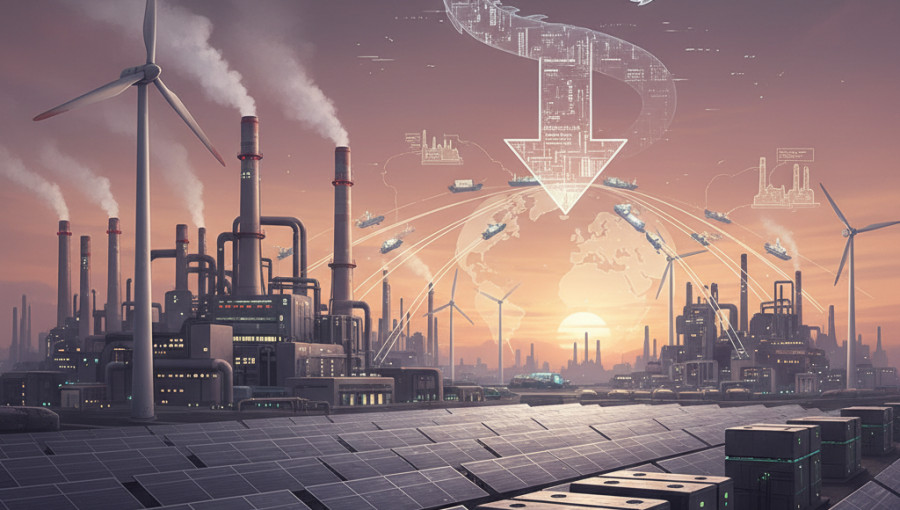
China continues to command the global clean energy manufacturing landscape, controlling over 90% of solar panel production and the vast majority of wind and battery technology. While renewable energy adoption is surging across the European Union, India, and the United States, China’s industrial dominance remains unchallenged due to massive domestic demand and aggressive export strategies. However, recent data indicates a sharp contraction in Chinese cleantech investment as the nation grapples with significant overcapacity, a trend that may slightly alter the global market balance by the end of the decade.
The global transition toward sustainable power is accelerating at an unprecedented pace. In regions like India and China, renewable energy is rapidly displacing coal as a primary power source, while the European Union recently reached a milestone where wind and solar output exceeded that of all fossil fuels combined. Even in the United States, the vast majority of new grid capacity is being driven by renewables and battery storage. However, the industrial backbone supporting this transition remains heavily concentrated in a single nation.
According to the latest Clean Investment Monitor report from Rhodium Group and the Massachusetts Institute of Technology, China’s grip on the supply chain is nearly absolute. The country currently houses more than 90% of global solar manufacturing capacity and 83% of the world’s battery production. Wind technology follows a similar pattern, with China controlling nearly three-quarters of the market. Even in the electric vehicle (EV) sector, which is more competitive globally, Chinese manufacturers still account for two-thirds of total production capacity.
This dominance is fueled by a combination of massive domestic adoption and strategic policy. Beijing has prioritized energy self-sufficiency, leading to a domestic market that installed more than half of the world’s new wind and solar capacity last year. This immense scale has allowed Chinese firms to produce solar panels, batteries, and EVs at prices that are difficult for international competitors to match, making their exports highly attractive to global buyers.
Despite this lead, the pace of Chinese investment is beginning to cool. Last year, the country funneled $60 billion into cleantech manufacturing—a significant sum, but less than half of the previous year’s investment. This slowdown is largely attributed to a market mismatch; China has built more production capacity than the current global market can absorb. While investment in the U.S. and Europe remains relatively stable, it has not yet reached the levels necessary to significantly disrupt China’s market share.
Looking toward 2030, analysts expect the global manufacturing landscape to shift slightly as the U.S., India, and Europe expand their battery and EV sectors. However, the underlying dynamics suggest that China will maintain its primary position. With overcapacity expected to persist through the end of the decade, the primary challenge for other nations will be competing with the established infrastructure and low-cost output of the Chinese industrial machine.