
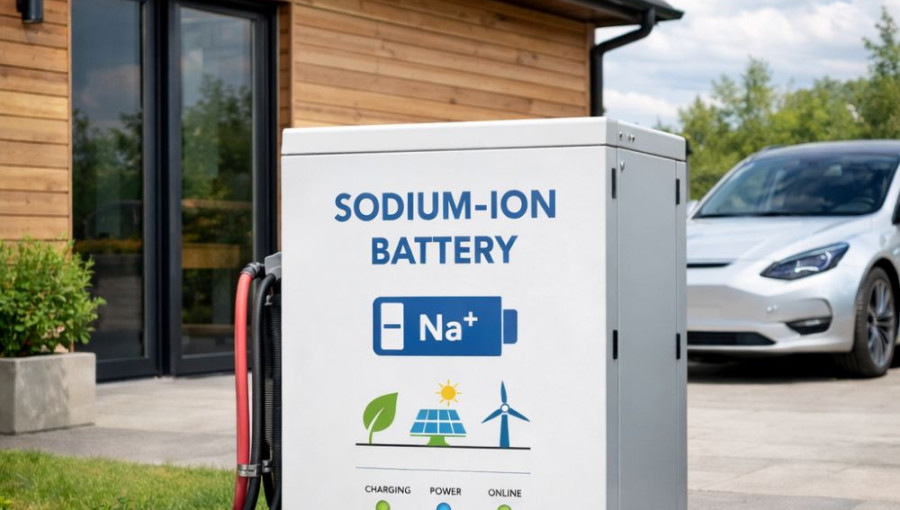
Dario Bertagna, senior managing director at Capital Dynamics, warns that Europe risks trading one energy dependency for another by relying on non-European supply chains for battery energy storage systems (BESS) and solar modules. As Europe expands its solar capacity, robust storage is essential for grid stability. Bertagna advocates for a Western-led supply chain, suggesting that Brussels and Washington should collaborate on research and implementation. While sodium-ion technology shows promise for future energy storage, cost parity with lithium-ion batteries is not expected until at least 2031, necessitating significant investment and strategic policy support throughout this decade.
The push for energy independence requires a shift in how Europe approaches its renewable infrastructure. Bertagna highlights that the current reliance on Asian supply chains for solar panels serves as a cautionary tale for the burgeoning storage sector. With projections suggesting that European BESS capacity could surpass 50 GW by 2030, the region faces an estimated €80 billion investment requirement. Capital Dynamics remains focused on key markets, including the United Kingdom, Italy, Spain, Ireland, and Germany, where regulatory and urban planning environments offer the most viable opportunities for large-scale storage deployment.
Regarding battery chemistry, lithium-ion is expected to maintain its market dominance for the next ten years. Although sodium-ion batteries have gained investor interest due to their operational flexibility, they currently face a cost disadvantage. In 2025, sodium-ion costs were approximately $59 per kWh, compared to $52 per kWh for lithium iron phosphate (LFP) batteries. Bridging this 13% price gap depends heavily on manufacturing scale and political commitment. Bertagna emphasizes that achieving a secure, Western-controlled energy infrastructure is a long-term endeavor, requiring a diverse technological approach rather than reliance on a single solution or geographic region.