
Google has announced a partnership with the Salt River Project (SRP) in Arizona to promote non-lithium long-duration energy storage (LDES) technologies. This collaboration aims to advance the commercialization of LDES through pilot projects backed by Google’s funding, which will also facilitate the evaluation of these initiatives’ performance. By enhancing energy storage solutions, both organizations hope to support sustainability goals and improve grid reliability. The partnership follows previous collaborations between the two entities, underlining the growing importance of non-lithium solutions in the energy sector.
Google will fund a portion of the costs for LDES pilot projects developed on the grid operated by SRP. The tech firm will also evaluate data on the pilot projects’ operational performance and provide input on the research and testing plans. “We believe that long duration energy storage will play an essential role in meeting SRP’s sustainability goals and ensuring grid reliability,” said Chico Hunter, SRP manager of innovation and development. “Long duration energy storage is a key technology in the portfolio of advanced energy solutions that we want to bring to market faster—to unlock stronger, cleaner, more resilient grids,” added Lucia Tian, head of advanced energy technologies at Google.
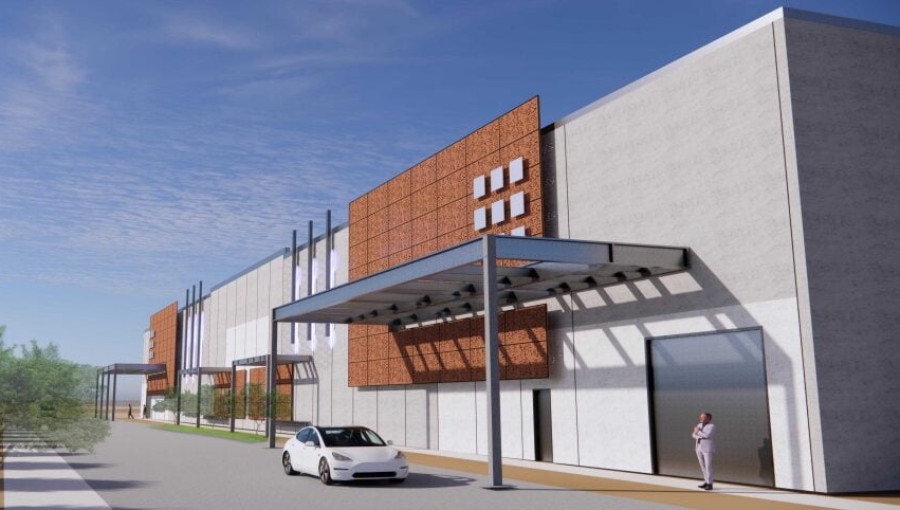
“Through our collaboration with SRP, we aim to accelerate the innovation and technological advancements necessary to deploy LDES solutions at scale so communities in Arizona and beyond can meet their power needs reliably and cost-effectively for years to come.” SRP and Google have already collaborated previously. SRP and IPP NextEra Energy Resources have together deployed two solar-and-storage projects, one with a 250MW/1,000WMh BESS that came online last year, which will feed Google’s data centres in Mesa, Arizona. Google is building a new facility there too, pictured above.
While also deploying or buying power from lithium-ion BESS projects like the above, SRP has also issued requests for proposals (RFPs) in 2024 and 2022 for non-lithium LDES projects. The results of the 2024 one are still to be announced while winners of the 2022 RFP include organic flow battery firm CMBlu. The fact Google is funding as well as providing research assistance into LDES demonstrates it may see a clear need for the technology to power its own operations long-term. It’s an interesting moment for LDES and the RFPs and above partnership’s emphasis on non-lithium tech is noteworthy.
Continued price falls for lithium-ion BESS have made it a real contender for LDES in the 8-12 hour range, and numerous guest blogs on Energy-Storage.news have covered this. Lithium-ion OEM Envision Energy’s chief engineer Kotub Uddin gave an overview of how lithium-ion had become cost-effective for such durations in March, while Sightline Climate analyst Lukas Karapin-Springorum wrote yesterday on how this is now reflected in the technology mix of global LDES pipelines. Last month, LDES Council CEO Julia Souder called for increased policy action to support LDES’ scale-up, though didn’t discuss technological details in particular.