Holland Solar Urges Government To Remove VAT On Home Batteries
The industry association is calling for policy changes to address double energy taxation and improve system integration for households.
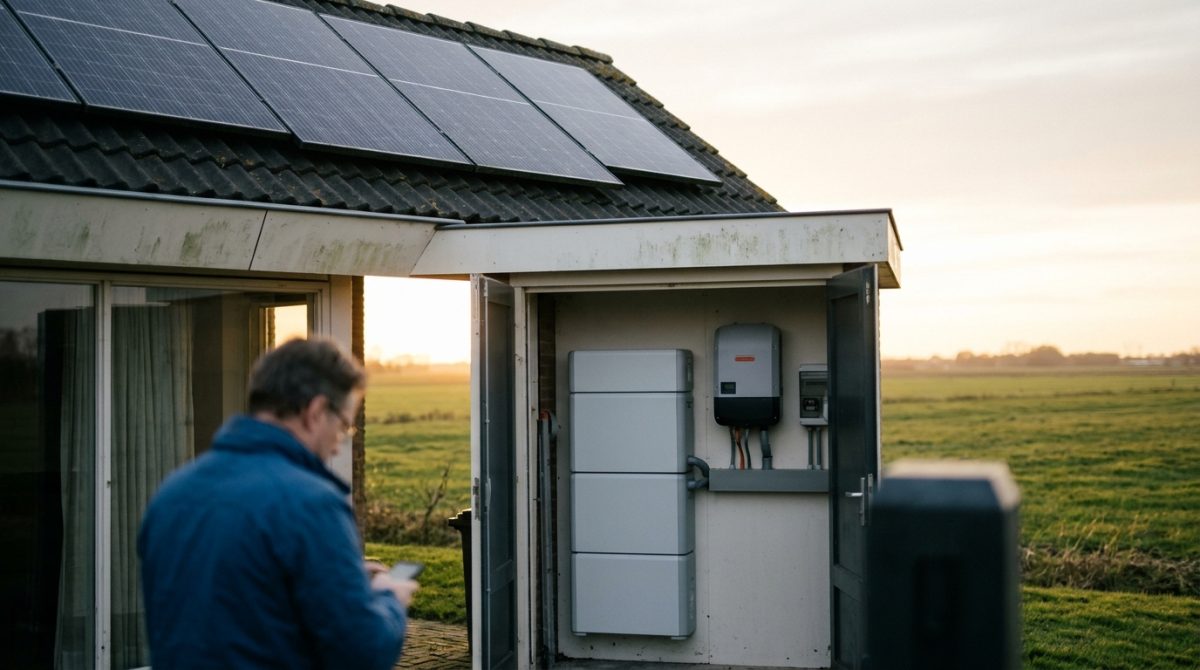
The industry association Holland Solar has called on the Dutch government to eliminate the 21 percent value-added tax on home batteries and resolve issues surrounding double energy taxation. Ahead of a parliamentary roundtable discussion, the group argued that these fiscal barriers hinder the efficient use of solar energy and prevent households from effectively managing their own power consumption.
By the end of last year, the Netherlands had 29.4 gigawatt-peak of solar capacity connected to the grid. To meet the national targets of 75 to 95 gigawatt-peak, the country requires 3 to 4.4 gigawatt-peak of new capacity annually starting in 2026. However, the Netherlands Enterprise Agency (RVO) projects an average of only 1.3 gigawatt-peak per year over the next three years. Holland Solar stated that relying solely on increasing generation will not bridge this gap.
The organization advocates for treating solar panels, heat pumps, home batteries, and electric vehicles as a single integrated system. This approach would allow households to lower energy costs and reduce pressure on the power grid. To achieve this, Holland Solar is pushing for interoperability to become a mandatory requirement for subsidies, ensuring that different devices can communicate and function within a smart system.
Furthermore, the association is urging the government to reconsider its recent decision not to implement a zero-percent VAT rate for home batteries, noting that solar panels are already exempt. They also highlighted the need to address double energy taxation, which currently discourages the use of home storage and bidirectional charging from electric vehicles. Additionally, Holland Solar requested that the government grant municipalities the authority to mandate solar installations on suitable commercial rooftops and establish a national investment scheme for solar carports on large parking lots.