
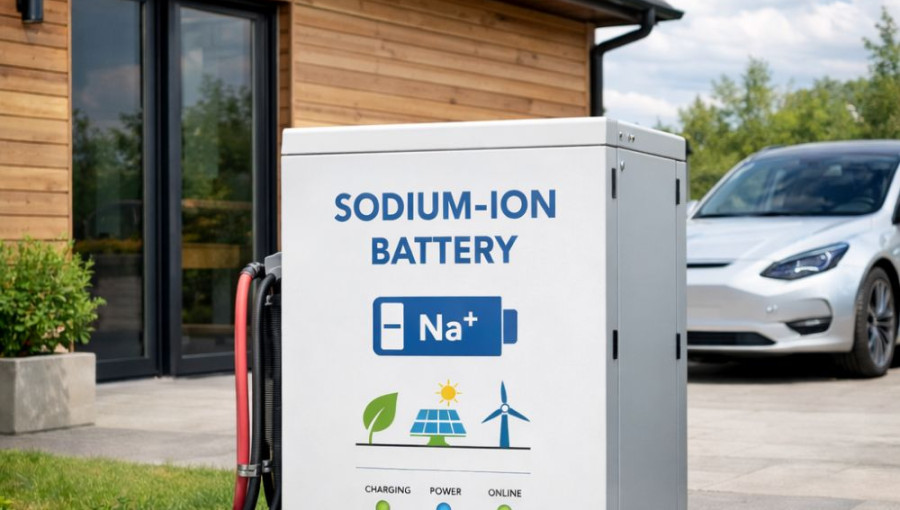
Brown University researchers have established concrete design specifications for hard carbon anodes, potentially accelerating the commercialization of sodium-ion batteries for stationary energy storage. By utilizing quantum-mechanical simulations and zeolite-templated carbon, the team identified that a pore size of approximately one nanometer is ideal for balancing ionic and metallic sodium storage. This discovery addresses long-standing uncertainties regarding sodium storage mechanisms, offering a more sustainable and cost-effective alternative to lithium-ion technology through the use of abundant sodium resources.
Researchers in the United States have unveiled new insights into the behavior of sodium storage within carbon materials, a development that could significantly enhance the commercial appeal of sodium-ion batteries. Published in the journal ESS Batteries, the study provides a roadmap for synthesizing anode materials that maximize battery performance. Lead author Lincoln Mtemeri noted that these findings represent some of the first specific design guidelines for creating hard carbon anodes in a laboratory setting, clearing a path for the future of large-scale renewable energy storage.
Hard carbon has long been considered a frontrunner for sodium-ion battery anodes due to its unique structural and conductive properties. Its disordered and porous nature facilitates efficient ion storage and rapid charge transport while maintaining long-term stability. Despite these advantages, the specific sodiation mechanism—how sodium is stored within the carbon—has remained elusive to scientists because of the material’s structural complexity. This lack of clarity has hindered the creation of accurate theoretical models to predict battery voltage.
To solve this, the research team focused on zeolite-templated carbon (ZTC), a material with precise nanoporous structures that allow for controlled observation. Using density functional theory (DFT), a sophisticated computational method, the scientists simulated how sodium atoms interact with these pores. They discovered a dual-stage process: sodium first binds to the pore walls through ionic interactions, and once the surfaces are saturated, it begins to cluster in the center of the pores, forming metallic groups.
This coexistence of ionic and metallic sodium is vital for maintaining a low anode potential, which in turn increases the overall voltage of the battery cell. Furthermore, the ionic sodium helps prevent the formation of sodium metal plating, a phenomenon that can lead to dangerous short circuits. According to the study, a pore size of roughly one nanometer is the optimal dimension for maintaining this balance between ionicity and metallicity.
The implications of this research are significant for the global energy transition. Sodium is roughly 1,000 times more abundant than lithium, making it a far more sustainable and less expensive alternative for the battery industry. By establishing clear descriptors such as pore size, specific volume, and carbon topology, the Brown University team has provided the industry with the tools needed to optimize carbon-based electrodes and bring high-performance sodium-ion batteries to the global market.