
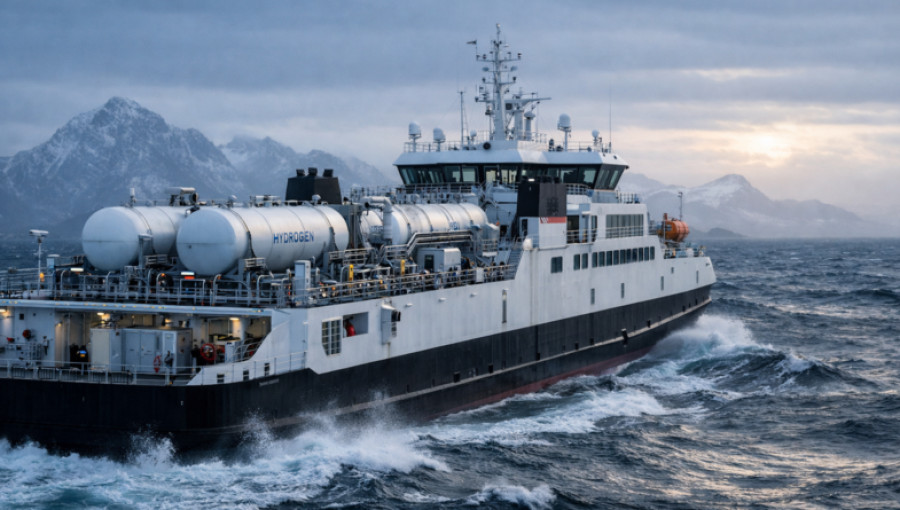
A recent study by DNV for the European Maritime Safety Agency (EMSA) has significantly raised the expected costs for hydrogen-powered shipping by emphasizing rigorous new safety requirements. The report suggests that hydrogen necessitates more complex containment and detection systems than liquefied natural gas or batteries, primarily due to its high volatility and ignition risk. By recommending secondary enclosures for all potential leak sources, even on open decks, the guidance shifts the maritime hydrogen debate from theoretical decarbonization potential to the harsh realities of engineering expenses and capital allocation, likely favoring battery and methanol alternatives.
The DNV findings indicate that hydrogen-fueled vessels require a design-based safety regime far more stringent than those for alcohol fuels or batteries. This is not merely a regulatory nuance but a significant financial signal to the maritime industry. Every additional layer of containment, detection, isolation, and ventilation must be financed, maintained, and inspected to satisfy classification societies. In the shipping sector, safety architecture is embedded in the physical steel and operating procedures of a vessel, making these high-tech requirements a permanent increase in the cost of doing business.
While the EMSA guidance is advisory and non-mandatory, it carries substantial commercial weight. The recommendation that all hydrogen leak sources be protected by secondary enclosures—including those on open decks—marks a shift in safety philosophy. Previously, many designers assumed that hydrogen’s natural buoyancy and open-air dispersion would be enough to mitigate leak risks. However, DNV’s summary suggests that because hydrogen incidents can escalate faster than human or sensor-based responses, passive and automatic physical protections are necessary.
The financial burden of these safety measures is distributed across four distinct layers. The first is direct equipment cost, including double-walled pipe runs, redundant gas detection, and specialized vent masts. The second involves increased engineering costs for detailed risk assessments and complex design approvals. Third, operating costs rise due to specialized crew training and intensive maintenance schedules. Finally, the infrastructure cost remains a hurdle, as hydrogen requires a bespoke value chain that lacks the maturity of the battery or methanol sectors.
In the competitive landscape of maritime decarbonization, hydrogen faces a “distributed safety problem.” Unlike batteries, where risks like thermal runaway are concentrated and manageable through defined architectures, hydrogen risks spread across storage, conditioning, and bunkering systems. For short-sea routes, such as ferry operations, batteries and battery-hybrids continue to advance in efficiency and cost-effectiveness, while hydrogen accumulates additional engineering conditions and system costs.
The real-world implications are visible in Norway’s Lofoten ferry project. The contract for these 120-meter vessels is valued at approximately €450 million over 15 years. While the project was designed with the assumption that hydrogen could safely disperse from the upper deck, the new DNV guidance puts pressure on this logic. If the design must move toward physical secondary containment to meet emerging safety standards, the resulting rework for the two vessels could cost between €4.5 million and €13.5 million, potentially delaying their entry into service.
Ultimately, the DNV report highlights that hydrogen remains the most difficult and expensive solution for maritime transport, even under favorable conditions. While methanol and ethanol benefit from established international guidelines and existing infrastructure compatibility, hydrogen continues to struggle with poor round-trip efficiency and high fuel costs. By hardening the engineering assumptions around hydrogen, these safety findings make it increasingly difficult for the fuel to compete with the rapidly maturing battery ecosystem and low-carbon liquid biofuels.