
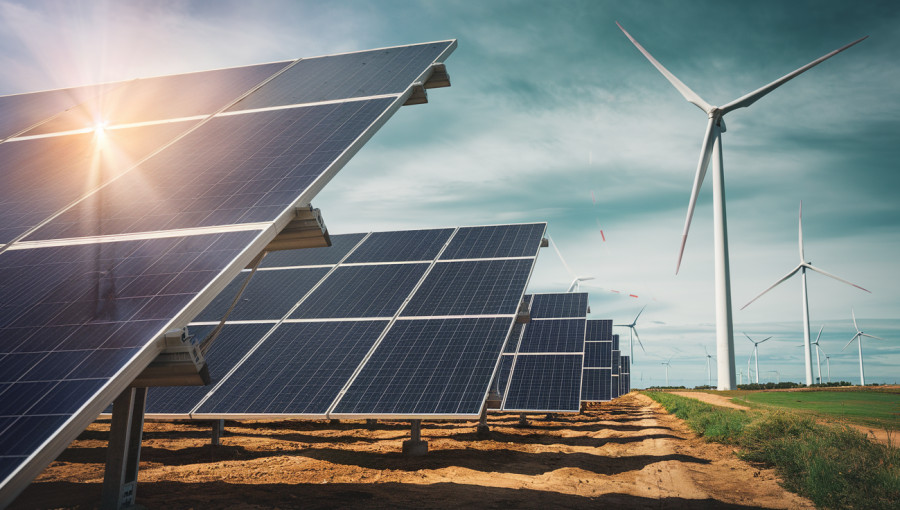
A recent report from the International Energy Agency (IEA) indicates that global renewable energy capacity is projected to double by 2030, primarily driven by solar energy. However, progress has slowed due to policy changes in the U.S. and China, persistent regulatory hurdles, and financial challenges for manufacturers. The IEA warns that without significant advancements in permitting and grid infrastructure, the world may fall short of ambitious climate goals set for COP28, reaching only 2.6 times the capacity of 2022 instead of the targeted tripling.
According to the IEA, 2025 is expected to see a substantial increase in renewable capacity, following a record addition of approximately 685 gigawatts (GW) in 2024. In the primary scenario, installations in 2025 are forecasted to surpass 750 GW, with solar contributing nearly 80% of the growth, while wind energy accounts for around 20%. Onshore wind is anticipated to achieve a record high, and although offshore wind is predicted to bounce back from a sluggish 2024, it will still lag behind previous expectations. Big hydropower projects in China and India are expected to dominate new capacity, while geothermal energy will see modest gains.
China’s recent transition from fixed tariffs to provincial auctions contributed to a surge in grid connections in early 2025—solar additions in May alone soared twelvefold year-on-year—before entering a noticeable decline. For the entirety of 2025, China is projected to set a new renewables record, reaching approximately 465 GW in the main scenario, although new market risks pose challenges for developers. In contrast, distributed solar growth is slowing for residential applications, but the commercial and industrial sectors are benefiting from lower module costs and rising electricity prices.
In the United States, while the prospects for new renewable installations in 2025 remain solid, the medium-term outlook has taken a turn for the worse. Legislative changes, including the acceleration of tax credit phase-outs and tighter norms for construction, coupled with a pause on new offshore wind projects, threaten future advancements. The IEA now estimates that growth in renewable capacity over the next few years could be nearly 50% lower than last year’s projections, particularly impacting wind energy and distributed solar.
The report projects that total new renewable power capacity globally will reach approximately 4,600 GW from 2025 to 2030, nearly equivalent to the entire renewable capacity of China, the European Union, and Japan combined. Solar power will represent around 80% of this increase, while onshore and offshore wind will also see significant contributions, despite some downward revisions from last year’s expectations. However, the growth of dispatchable renewables remains limited, contributing only about 4% of new capacity amid calls for greater flexibility in energy systems.
Despite the challenges, demand for renewable projects continues to be strong, particularly as major developers reaffirm their deployment goals for 2030. The IEA estimates that corporate procurement and merchant plants may account for up to 30% of global renewable additions by the decade’s end. Competitive auctions are increasingly becoming the preferred method for securing utility-scale renewable projects, driven by market reforms in China and rising activities in Europe.
The auction activity saw a slowdown in early 2025 compared to the record levels achieved in 2024, with Europe maintaining its position as the leading market. Recent changes in permitting policies in Germany and increasing installations in Turkey have led to more awards for onshore wind. Nevertheless, offshore wind projects have struggled amid high costs and lower participation rates. Meanwhile, supply chain dependencies remain pronounced, particularly for solar panel manufacturing, with China expected to dominate these markets through 2030.
As variable renewable sources are projected to meet an increasing share of global electricity demand, the IEA emphasizes the need for enhanced grid infrastructure, energy storage solutions, and demand-side management to alleviate current pressures in power systems. Without these investments, curtailment rates and price volatility in markets that rely heavily on renewables are likely to escalate.
Furthermore, renewable solutions are vital for enhancing energy security, significantly reducing fossil fuel dependency and import bills in many countries since 2010. This underscores the critical role renewables play in navigating energy crises, as demonstrated during the gas price surge in 2022.
Regional progress towards renewables shows considerable variation, with India poised to become a major player by 2030, while Southeast Asia and the Middle East are also witnessing growth in renewables, albeit facing unique challenges. The broader global commitment to renewable energy goals, however, remains fragile, with several nations needing to enhance their commitments to meet future targets, particularly ahead of COP28.
As renewable energy integration expands, changes in electricity pricing structures reflect the shifting generation landscape, though retail prices remain influenced by various factors beyond energy costs. Though there is progress in transport decarbonization, it is currently slow, with biofuels expected to play a large role in future growth.
In summary, while the expansion of renewables continues, immediate actions are required to achieve COP28 targets, including improved permitting processes, modern grid structures, resource flexibility, and stable financing mechanisms. Addressing supply chain issues and ensuring better integration into current systems are also critical to accelerating the growth of renewable energy.