
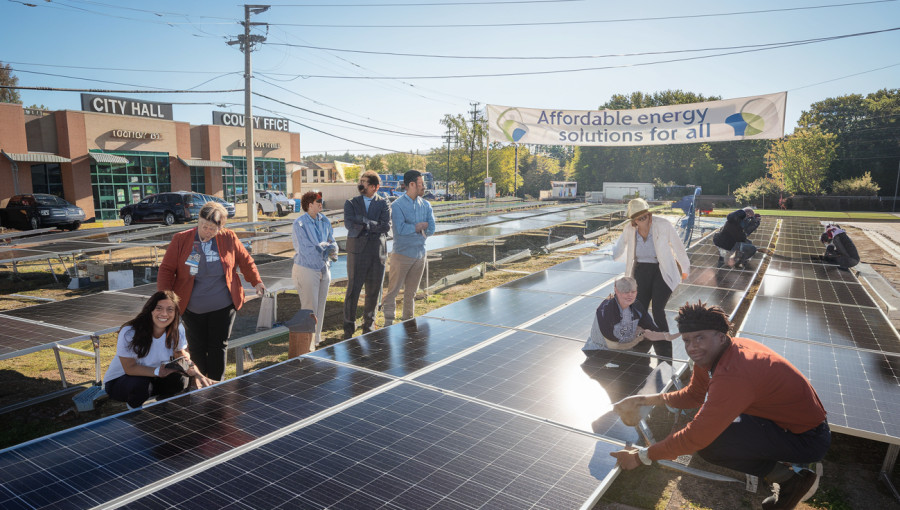
The Trump administration is complicating access to solar energy for low-income households by reducing funding and incentives for affordable solar initiatives. Despite these challenges, developers like Flywheel Development are moving forward with their solar projects, aiming to provide clean energy to those typically unable to afford it. Alternative financing options and community solar projects are essential for making solar energy accessible to underserved communities, while organizations adapt to new policies and regulations that impact costs and potential savings.
The Trump administration has clawed back billions of dollars in Inflation Reduction Act funding for projects serving low-income communities across the country, including $7 billion for the federal “Solar for All” program. In July, the GOP-controlled Congress passed a sweeping law that will swiftly phase out the tax credits solar developers use to bring down costs. For months, the administration has held up $20 billion in federal green bank funding that some organizations planned to use to make solar available to more people. Clean energy supporters are opposing the Trump administration’s freeze on green bank money in court and are expected to challenge the Solar For All clawback as well. In the meantime, nonprofits and state agencies planning affordable solar projects with the money are left in limbo. Still, some developers are forging ahead. Take John Miller and Jessica Pitts as an example. The pair, which founded Flywheel Development in 2014, is still proceeding with all 35 of their planned low-income solar projects, which will deliver a total of 17.5 megawatts of solar power to people who otherwise wouldn’t be able to access the clean energy source. Miller and Pitts think organizations like theirs can withstand Republican attacks on clean energy programs as long as other financing and policy partners pick up the slack. Figuring out a way to continue this work is crucial as energy costs rise even faster under Trump. Rooftop solar is an effective way for households to reduce their electricity bills, but many low-income households find installation challenging due to homeownership issues or high upfront costs, and rental properties often lack landlord incentives to install solar panels. Community solar projects like those developed by Flywheel aim to solve these problems by allowing low-income households to access energy from shared installations, benefiting from clean energy without the barriers of traditional rooftop systems.
In areas without community solar access, multifamily properties can utilize on-site solar arrays to cut utility bills. Those savings can be reinvested into property upgrades alongside lease payments for hosting solar systems. Federal actions may have reduced the potential for affordable solar initiatives, but there remains a window of opportunity. John Fox, senior director of clean energy at Enterprise Community Partners, highlighted that changes have dramatically altered the landscape for solar deployment. His organization oversees Enterprise Community Development, one of the largest nonprofit affordable housing providers in the U.S. Enterprise has installed 2.1 megawatts of solar across 13 properties in various states and is working on another 7.6 megawatts among other clean energy projects. Originally, the goal was to deploy 24 megawatts of solar by 2032, but Fox now estimates that this will be cut in half due to the cost constraints of the current environment.
Despite Flywheel pushing ahead with their entire project pipeline, the changing policies are making the financial landscape tougher. The recent tax credit phaseout poses significant implications for project timelines and compliance management, with construction deadlines set for projects to qualify for the current federal tax credits. This complex regulatory environment challenges developers and increases costs, which ultimately limits the potential utility bill savings for low-income families. Historically, Enterprise has provided savings between 20% and 50%, but maintaining the higher discount levels is not feasible with the current policy changes.
While Flywheel can secure reasonable returns on its investments, the rising costs from losing federal tax credits will necessitate adjustments from lenders. However, Pitts believes that community-focused financing partners like the DC Green Bank and local CDFIs will adapt to these changes. Collaboration with local government initiatives, like D.C.’s Solar for All program, gives Flywheel essential financial
https://www.canarymedia.com/articles/solar/affordable-housing-developers-trump-funding-pullback