Solar Panels Boost Turnip Yields And Energy Production
Researchers at the University of Western Ontario have demonstrated that integrating specific solar panel technologies with turnip cultivation can significantly enhance crop productivity. The study found that semi-transparent cadmium telluride and crystalline silicon solar modules not only generate renewable energy but also improve turnip root and leaf yields by optimizing light distribution and reducing heat stress. By carefully matching PV module transparency and spectral transmission to plant needs, the researchers identified a path toward maximizing both food production and clean energy generation within agrivoltaic systems.
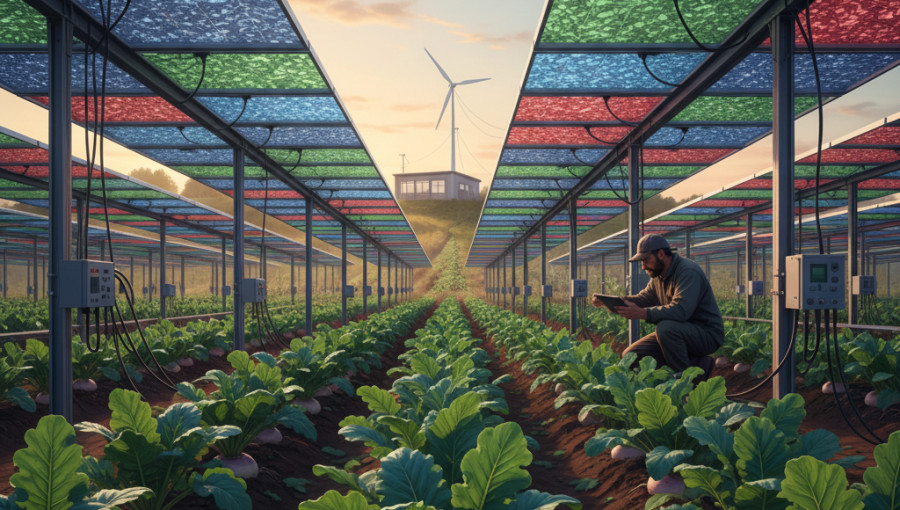
The research team, led by Joshua M. Pearce, conducted extensive trials at the Western University Field Station in Ilderton, Ontario. The study focused on how different photovoltaic materials influence the microclimate and growth of "McKenzie" turnips. The experimental setup utilized stilt-mounted racks, allowing for field-scale agrivoltaic testing.
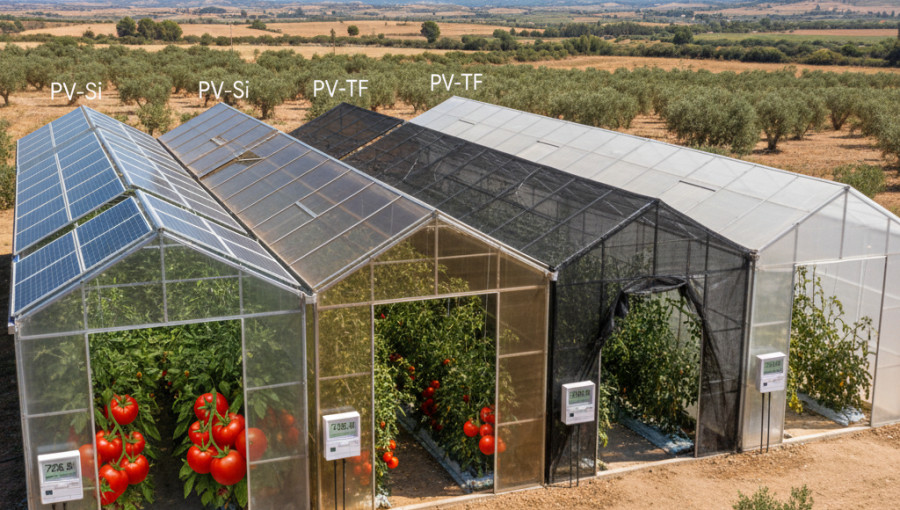
The investigation involved thirteen distinct types of PV modules. These included three crystalline silicon (c-Si) variants with transparency levels of 8%, 44%, and 69%, alongside ten cadmium telluride (CdTe) thin-film modules. The CdTe panels featured various spectral filters—blue, green, and red—with transparency ranges between 40% and 80%.
A key finding of the study was the difference in light quality provided by the two technologies. While the CdTe modules offered a more uniform light distribution across the crops, the c-Si modules created intermittent shadow patterns due to the specific arrangement of the solar cells. Despite these differences, several semi-transparent configurations resulted in higher biomass and food output compared to traditional open-field farming.
Throughout the growing season, which began with sowing on May 21, 2025, the team monitored critical factors including photosynthetically active radiation (PAR), spectral irradiance, plant height, and leaf count. The data suggests that the strategic selection of solar module properties can mitigate environmental stressors for the plants while maintaining energy efficiency.
This research highlights the significant economic potential of agrivoltaic adoption in Canada. By synchronizing solar module technology with plant physiology, farmers can diversify their income through energy production without compromising—and in some cases, even improving—their agricultural output. The study concludes that the future of dual-use land management depends on matching the specific spectral needs of a crop with the right photovoltaic hardware.