
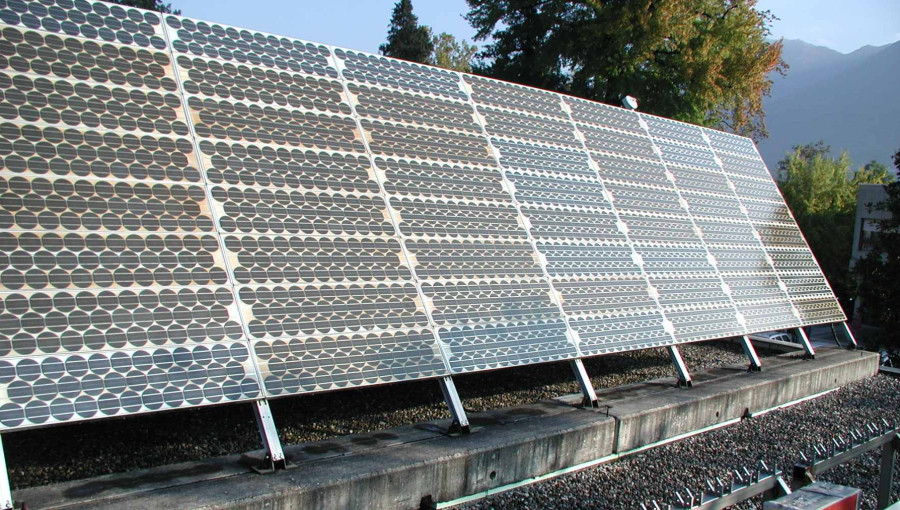
A recent study of solar installations in Switzerland reveals that high-quality solar panels can maintain over 80% of their original efficiency even after three decades of operation. Research led by the University of Applied Sciences and Arts of Southern Switzerland analyzed systems installed between 1987 and 1993, finding an average annual degradation rate of just 0.24%. This significantly outperforms industry expectations of 0.75% to 1%, suggesting that solar technology offers a much longer functional lifespan and greater return on investment than previously estimated.
Researchers examined six distinct solar installations across various Swiss landscapes, ranging from low-lying valleys to high-altitude regions. By comparing decades of monitoring data with modern laboratory tests on the aged solar module units, the team discovered that environmental conditions and material composition play a decisive role in longevity. The study proves that while most hardware is sold with a 25-year warranty, well-manufactured equipment can continue to slash electricity bills long after the coverage ends.
The findings, published in the journal EES Solar under the title “Three decades, three climates: environmental and material impacts on the long-term reliability of photovoltaic modules,” highlight that solar panels do not fail like mechanical engines with moving parts. Instead, they undergo a slow degradation of materials. Heat emerged as a primary catalyst for this breakdown; systems at lower altitudes operated at temperatures up to 20 degrees Celsius higher than those in cooler, elevated regions. This thermal stress accelerates the deterioration of the encapsulant—the clear material protecting the solar cell—which can eventually lead to moisture ingress and corrosion.
This longevity significantly shifts the financial outlook for residential and commercial solar investments. When a solar panel continues to generate substantial power beyond its expected lifespan, it provides years of additional savings after the system has already paid for itself. Furthermore, extended lifespans enhance the reliability of energy forecasts for utility providers and policymakers, ensuring a more stable transition toward renewable grids.
Beyond the economic benefits, the research underscores a critical environmental and health angle. Sustained performance from existing arrays means a consistent reduction in CO2 emission and less reliance on fossil fuels. This contributes to better air quality, addressing a major global health concern linked to millions of premature deaths annually.
While the study focused on a specific family of high-quality modules, the results align with broader data from the U.S. National Renewable Energy Laboratory. The takeaway for the typical consumer is that the “bill of materials” and specific installation choices are vital. Effective heat management and the selection of robust components can be the deciding factors in whether a system merely survives its warranty or continues to produce clean energy for more than 30 years.