
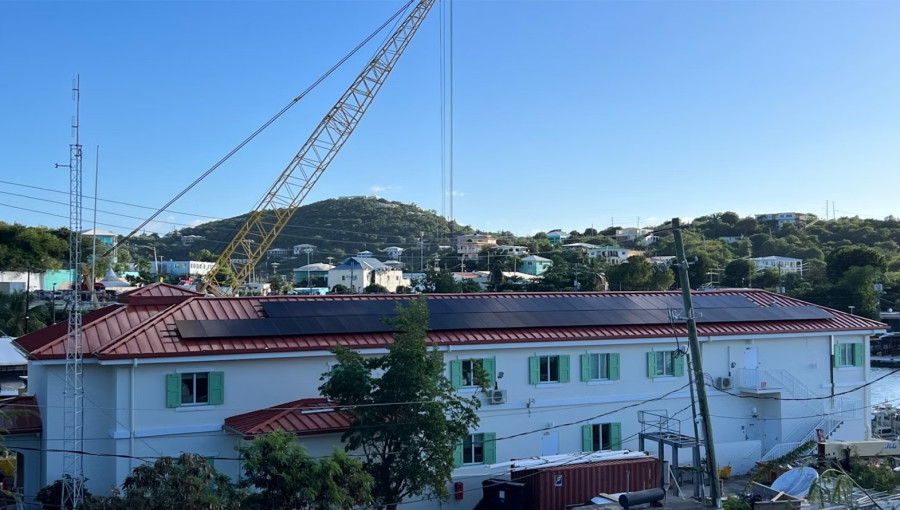
In the face of climate-driven disasters and grid instability, solar power is emerging as a critical tool for energy resilience worldwide. Following events like severe hurricanes in Jamaica, communities with solar installations demonstrated a remarkable ability to maintain power, highlighting the technology’s value. This trend extends globally, with accessible solutions like plug-in solar panels gaining traction in Europe and massive capacity growth seen across the Global South. From individual homes to entire airports, solar energy is rapidly becoming a mainstream solution for reliable, independent power.
The aftermath of severe weather events, such as the devastation caused by a major hurricane in Jamaica, starkly illustrates the growing importance of decentralized energy. While the island grappled with widespread, prolonged power outages, a small but significant group of residents with rooftop solar panels found their lights on the very next day. These households became crucial community hubs, offering neighbors a place to charge devices, store refrigerated food, and find shelter. According to a Kingston-based installer, over 300 of his customers’ systems withstood the storm with only minor issues, showcasing the durability of modern solar installations.
Jamaica’s experience is part of a larger movement towards energy independence. The nation’s installed rooftop solar capacity surged from less than 1.4 megawatts in 2015 to nearly 65 megawatts by 2023, with renewables now accounting for about 10% of its power generation. This shift is a prime example of the move toward distributed energy resources (DERs), which are small-scale, local power sources. Solar panels are particularly well-suited for this model due to their scalability and versatility, joining other technologies like microgrids and small wind turbines that empower communities and reduce reliance on centralized, vulnerable power grids.
The solar revolution is not limited to homeowners with suitable roofs. A new wave of accessible technology is empowering a broader range of consumers. Plug-in solar systems, which can be self-installed and connected directly to a standard household outlet, are gaining significant popularity. In Germany, for example, over half a million of these systems have been deployed, with individual panels available in major retail stores for around $217. In parallel, the market for portable solar generators—complete systems with panels, a battery, and an inverter—is expanding, giving more people control over their electricity supply.
On a global scale, the momentum behind solar energy is undeniable, particularly in emerging economies. The past decade has seen solar transform from a niche alternative to the world’s fastest-growing electricity source. This expansion is most pronounced in the Global South, where the adoption of solar and wind power is occurring at twice the rate of the Global North. Nations across Latin America, Africa, and Asia are leveraging their vast renewable energy potential—estimated at 70% of the world’s total—to meet rising energy demands with technology that is increasingly cheaper than fossil fuels.
Several countries are setting benchmarks for solar integration. The Netherlands, Australia, and Germany lead in terms of cumulative installed solar capacity. In the first quarter of 2025, Europe achieved new records for solar and wind generation. Meanwhile, Pakistan’s energy landscape is being rapidly reshaped, with the country importing 17 gigawatts of solar PV and significant battery storage in 2024, paving the way for a “solar by day, storage by night” model. Similarly, Thailand is promoting a community solar program to add 1.5 gigawatts of capacity through small, locally-owned projects.
Beyond residential and utility-scale projects, solar technology is being adapted for a wide range of innovative applications. Combining solar panels with battery storage is becoming a standard solution for ensuring critical systems remain online during grid failures. Pushing the boundaries of installation, Nova Southeastern University in the United States is deploying a commercial-scale floating solar system. Airports are also transforming into clean energy hubs. India’s Cochin International Airport was the first to be fully powered by solar, while Denver International Airport in the US and George Airport in South Africa meet significant portions of their electricity needs with on-site solar farms.