
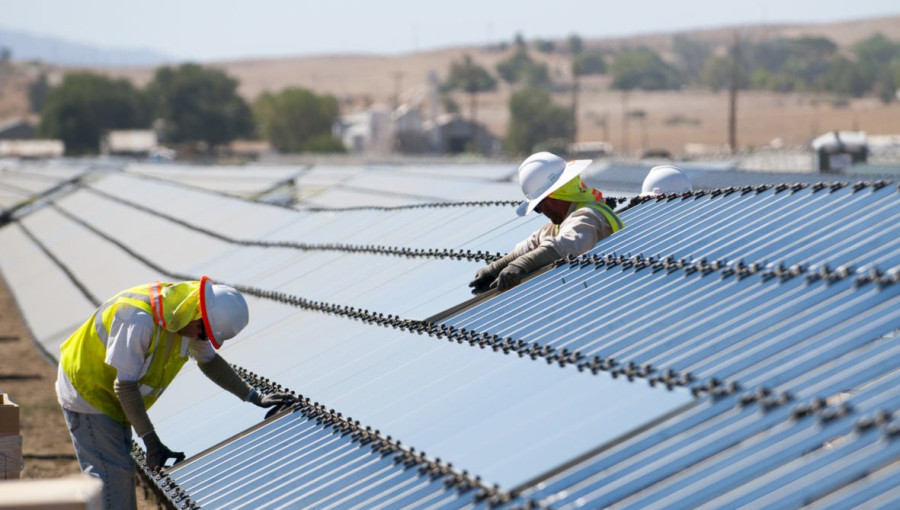
The International Renewable Energy Agency (IRENA) has revealed that solar energy remains the primary driver of global green employment, accounting for more than 40% of the renewable energy workforce in 2024. With 7.2 million positions worldwide, the solar sector outpaced all other technologies despite a notable slowdown in job creation relative to record-breaking capacity installations. China continues to lead the market, representing over half of the global solar workforce, while emerging economies like India and Brazil bolster the industry’s expansion amidst increasing automation and shifting project scales.
According to the latest annual report from IRENA, the total renewable energy workforce reached 16.6 million in 2024, marking a 2.3% increase from the previous year. This growth occurred alongside a historic 15% surge in total renewable power capacity, which reached 4,443GW. The solar sector specifically saw its global workforce rise to 7.2 million, up from 7.1 million in 2023. However, the modest rise in employment stands in stark contrast to the 32% growth in solar capacity recorded during the same period.
Analysts suggest this disparity indicates that the global energy transition has entered a new phase. Increased automation and significant economies of scale mean that fewer workers are now required to install each new unit of capacity. The report also highlighted that the labor intensity of projects varies significantly; decentralized rooftop solar installations typically require more human labor compared to large-scale utility projects.
Geographically, the solar workforce remains highly concentrated. China dominates the industry, accounting for 58% of all global solar jobs. Other major contributors include India, Brazil, the United States, and Pakistan, which round out the top five employers in the sector. Despite these figures, IRENA noted a growing geographical imbalance in job distribution, calling for stronger international collaboration to ensure a more equitable transition.
Looking ahead, the agency noted that the integration of artificial intelligence will likely have far-reaching impacts on the industry, though the exact balance of job losses and gains remains uncertain. IRENA Director-General Francesco La Camera emphasized that while technological deployment is booming, governments must prioritize the human element. He urged policymakers to implement trade and industrial strategies that foster domestic capacity, build skilled supply chains, and place workers at the heart of climate objectives.