
The global electric vehicle industry is on the verge of a major breakthrough as solid-state battery technology moves from experimental labs to real-world testing. Leading manufacturers in China and the United States are reporting massive leaps in energy density, with some prototypes promising driving ranges exceeding 1,500 kilometers on a single charge. As companies like Chery, BYD, and Factorial Energy prepare for mass production by 2027, this next generation of power cells aims to eliminate range anxiety while offering faster charging times and enhanced safety compared to traditional lithium-ion batteries.
Chinese automotive giants are currently leading the charge in deploying these advanced power sources. Dongfeng Motors recently conducted cold-weather testing on a prototype featuring an energy density of 350 Wh/kg, capable of covering 1,000 kilometers. Changan Automobile is following suit with its “Golden Bell” all-solid-state battery, which boasts 400 Wh/kg and a projected range of over 1,500 kilometers. The company expects to begin trial installations in vehicles by the third quarter of 2026.
Chery recently unveiled its “Rhino” battery series, highlighting an all-solid-state version with a remarkable energy density of 600 Wh/kg. This technology is designed to provide a range of 1,500 kilometers, with vehicle testing scheduled to commence next year using the Exeed ES8 model. Additionally, Chery is introducing semi-solid-state options that support ultra-fast charging, capable of adding 500 kilometers of range in just eight minutes.
Market leaders BYD and CATL are also accelerating their timelines, with plans for small-scale production starting in 2027. BYD’s latest Blade Battery 2.0, a lithium-iron phosphate (LFP) unit, already offers a range exceeding 1,000 kilometers. Complementing this hardware, BYD’s new 1,500 kW charging stations can replenish a vehicle’s capacity from 10% to 70% in only five minutes.
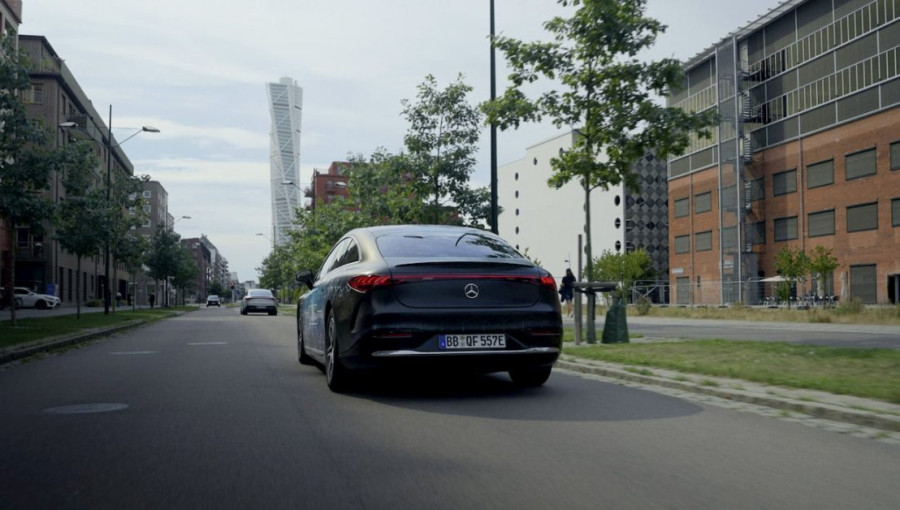
In the United States, Factorial Energy is making significant strides through partnerships with Mercedes-Benz, Stellantis, and Hyundai. Their Solstice platform features an energy density of 450 Wh/kg—approximately 80% higher than conventional lithium-ion cells—enabling a range of over 965 kilometers. Mercedes has already successfully tested a modified EQS equipped with Factorial’s solid-state cells, covering 1,200 kilometers during trials.
While these extensive ranges exceed the daily requirements of most drivers, the transition to solid-state technology represents a fundamental shift in EV efficiency. Beyond simply extending the distance between charges, these batteries offer lighter weight, improved thermal stability, and the potential for more diverse vehicle designs at competitive price points as the technology scales toward mass-market availability by the end of the decade.