
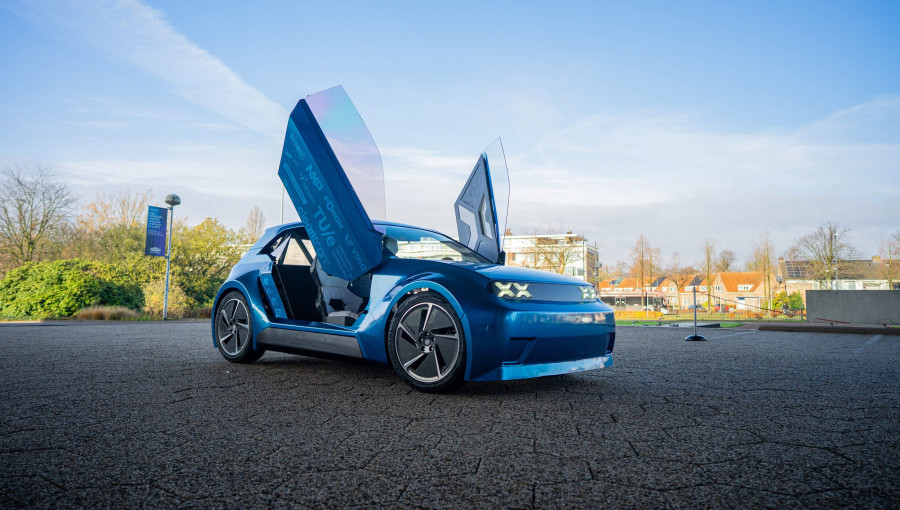
A group of students from Eindhoven University of Technology has developed ARIA, a modular electric vehicle designed to be repaired by its owner. The prototype, which stands for “Anyone Repairs It Anywhere,” features standardized components and a built-in toolbox to simplify maintenance. By moving away from integrated designs that often require specialized technicians, the project demonstrates a sustainable alternative for the automotive industry. The creators hope ARIA will encourage the European Union to expand Right to Repair legislation to include passenger cars, making electric mobility more accessible and long-lasting.
The ARIA concept, created by the TU/ecomotive student team, addresses the growing difficulty of maintaining modern electric vehicles. Unlike traditional models where batteries are often integrated into the chassis and parts are difficult to source, ARIA utilizes a modular architecture. Owners are guided by a specialized diagnostics app and an instruction manual, allowing them to perform fixes using tools stored directly within the vehicle. This approach aims to reduce reliance on manufacturer-controlled service networks and specialized labor.
Technically, the vehicle is built for efficiency and ease of access. It weighs approximately 650 kilograms and offers a commercial range of up to 220 kilometers. One of its most significant innovations is the battery system, which consists of six individual 12-kilogram units that can be detached and replaced by hand. The exterior features quick-release body panels and distinctive upward-opening scissor doors, providing immediate access to internal components for quick replacements or upgrades.
The project serves as a direct challenge to current manufacturing standards. Team leader Taco Olmer emphasized that if a small student group can develop such a vehicle within a single year, the global automotive industry has the capacity to adopt more practical, sustainable designs. While the European Union recently implemented laws requiring manufacturers to provide repair information and parts for various electronic goods, electric cars remain excluded from these mandates. The ARIA team intends for their prototype to serve as a case study for policymakers to rectify this gap.
Developed through a collaboration between Eindhoven University of Technology, Fontys University of Applied Sciences, and Summa, ARIA is the tenth vehicle produced by the TU/ecomotive group over the last decade. The project highlights how unconventional engineering methods can lead to scalable innovations in the field of sustainable mobility, potentially shifting how the industry views the lifecycle and maintenance of electric transport.