TNO Launches Perovion To Industrialize Flexible Solar Cells

The Netherlands Organization for Applied Scientific Research (TNO) has launched a new spin-off, Perovion Technologies, to spearhead the industrialization of flexible perovskite solar cells. By 2030, the company aims to establish the world’s first roll-to-roll manufacturing facility in the Netherlands, utilizing a continuous production method similar to newspaper printing. This technology targets applications where traditional glass-based solar panels are impractical, such as curved surfaces and lightweight industrial roofs. The initiative seeks to strengthen the European photovoltaic supply chain through strategic partnerships and advanced manufacturing techniques.
The transition from laboratory research to large-scale production marks a significant milestone for TNO. According to Sjoerd Veenstra, Chief Technology Officer at Perovion Technologies, nearly ten years of collaborative development within the SolarNL and Solliance frameworks have brought the technology to commercial readiness. Unlike conventional, rigid silicon modules, Perovion’s solar cells are manufactured on thin, flexible sheets, allowing for seamless integration into diverse architectural and industrial environments.
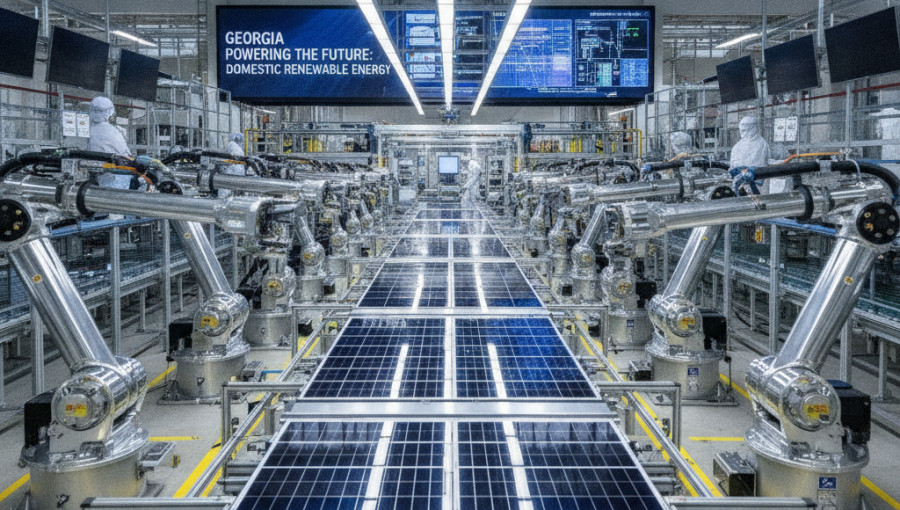
Central to the company’s strategy is the implementation of roll-to-roll manufacturing. This process involves the continuous printing of solar layers onto long rolls of flexible material, a method expected to significantly reduce production costs while increasing output volumes. The planned facility in the Netherlands will be the first of its kind dedicated specifically to perovskite solar cells, positioning the region as a hub for next-generation photovoltaic innovation.
Stefan van de Beek, CEO of Perovion Technologies, emphasized that the company is currently identifying niche markets where flexible solar modules can be deployed in the short term. To achieve industrial scale, the startup is actively seeking alliances with investors and specialists in materials science and equipment manufacturing. These collaborations are viewed as essential for accelerating the technology’s deployment and securing Europe’s position in the global renewable energy market.
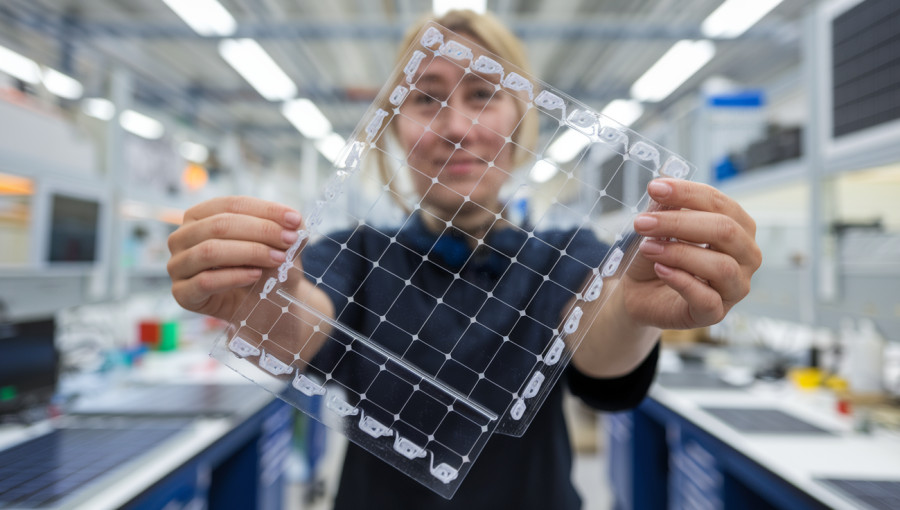
The technical viability of this approach was recently demonstrated through a partnership with Dutch manufacturer Solarge. The two entities showcased a prototype perovskite solar module measuring 32 centimeters by 34 centimeters. This lightweight module replaces heavy glass with a polymer cover and a thermoplastic organosandwich composite backing, resulting in a weight of just 5.5 kilograms per square meter. While the prototype focused on structural integration rather than peak efficiency, it serves as a proof of concept for future commercial products.
In tandem with its manufacturing goals, TNO is continuing to refine advanced fabrication methods. This includes the use of space atomic layer deposition (SALD) and other techniques compatible with flexible substrates. These research efforts are supported by international partners, including Sekisui Solar Film and the Brabant Development Agency, ensuring that the next generation of solar cells meets the rigorous demands of the global energy transition.