
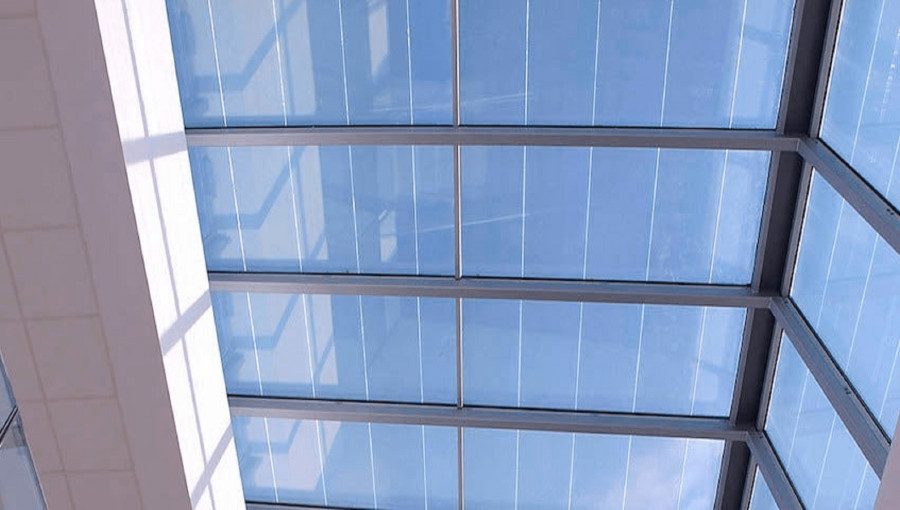
A research consortium in South Korea has unveiled a breakthrough in transparent solar window technology capable of generating electricity around the clock. Developed by scientists from Korea University, Korea Aerospace University, and KIST, the system utilizes a specialized optical reflector to capture energy from both outdoor sunlight and indoor artificial lighting. Unlike previous iterations that often distorted colors or blocked views, this innovation maintains high transparency and color accuracy, offering a versatile solution for zero-energy buildings and electric vehicle integration.
The hybrid solar window technology, led by Professor Jun Yong-seok from Korea University’s Department of Integrative Energy Engineering, addresses long-standing limitations in the field of transparent photovoltaics (PV). Traditional thin-film solar cells frequently struggle with color distortion during the light absorption process, which has hindered their widespread adoption as building-integrated photovoltaics (BIPV). This new system, however, preserves both the clarity and the visual neutrality required for standard architectural use.
The core of this innovation lies in a sophisticated structure that combines a distributed Bragg reflector (DBR) with bifacial silicon solar cells. The optical reflector is designed to selectively redirect invisible near-infrared light toward the solar cells while allowing the majority of visible light to pass through. This mechanism enables the window to remain highly transparent while harvesting energy from wavelengths that are typically wasted in conventional systems.
One of the most significant features of the technology is its ability to provide a consistent power supply regardless of the time or weather. By utilizing the properties of bifacial solar cells, the system generates electricity from sunlight during the day and switches to harvesting light from indoor sources, such as LEDs and fluorescent lamps, at night. This 24-hour cycle ensures a stable energy output that is not dependent on external environmental conditions.
Technical evaluations of the module revealed a visible transmittance of 75.6 percent, providing brightness levels comparable to standard commercial glass. Furthermore, the system achieved a color rendering index of 93.8 percent, a quantitative measure showing how accurately colors are reproduced through the medium. This high rating effectively solves the aesthetic issues of color shifting that have plagued earlier transparent solar cell designs.
Professor Jun highlighted the broad potential for the technology, noting that it could be applied to various industrial sectors, including the development of zero-energy buildings and windows for electric vehicles. By maintaining high transparency and superior color rendering while maximizing power generation, the approach offers a viable alternative for future sustainable infrastructure.
The research was supported by the Ministry of Trade, Industry and Resources and the Korea Institute of Energy Technology Evaluation and Planning (KETEP). The full findings of the study have been published in the scientific journal Joule, marking a significant step forward in the integration of renewable energy into everyday urban environments.