
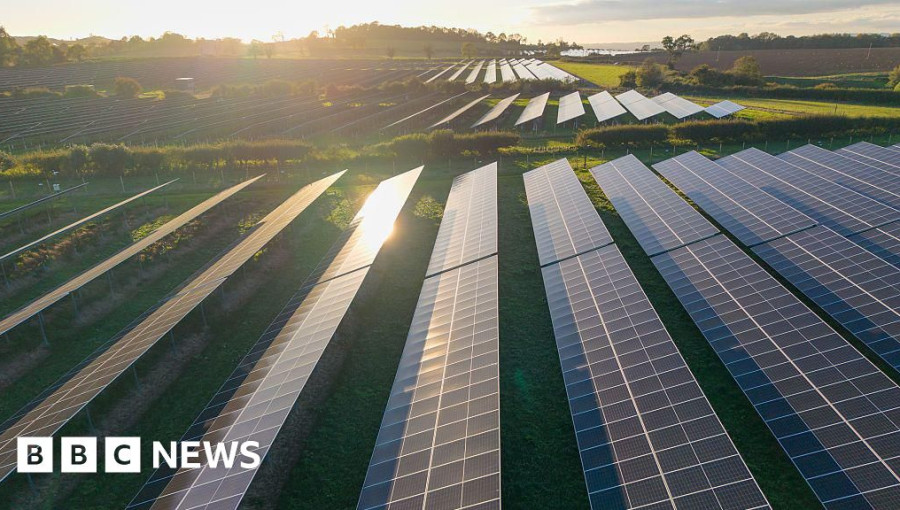
Great Britain achieved a historic milestone in 2025 as renewable energy production reached record levels, driven by a significant surge in wind and solar power. According to data from the National Energy System Operator (Neso), clean sources generated over 127 terawatt hours (TWh) of electricity. While wind remained the primary contributor, solar energy saw unprecedented growth during the UK’s sunniest year on record. Despite these gains, a slight increase in fossil gas usage highlights the complexities facing the government’s ambitious goal of achieving a nearly carbon-free power grid by 2030.
Wind energy spearheaded the transition last year, contributing more than 85 TWh—nearly 30% of the nation’s total electricity supply. However, the most dramatic shift occurred in the solar sector. Solar power generation climbed to over 18 TWh, marking a substantial increase of 4 TWh compared to 2024. During peak intervals in July, solar panels briefly provided more than 40% of the total electricity demand, a stark contrast to 2013 when solar output rarely exceeded 5% of the mix.
This growth was fueled by a combination of favorable weather and rapid infrastructure expansion. The year 2025 was the sunniest on record for the UK, providing ideal conditions for solar module efficiency throughout the spring and summer. On the infrastructure side, major projects like the Cleve Hill solar farm in Kent became operational, while approximately 250,000 new small-scale solar panel installations were added to residential and commercial rooftops across the country.
Despite the green energy records, electricity generated from fossil gas also rose to 77 TWh, up from 72 TWh in 2024. This increase was attributed to several factors, including the closure of the UK’s final coal power station, reduced nuclear output, and a decline in electricity imports from mainland Europe. Consequently, the average CO2 emission intensity of the grid rose slightly to 126g per kWh, emphasizing the continued reliance on gas to meet demand when renewable output fluctuates.
The British government has set an ambitious “clean power” target, aiming for 95% of electricity to come from renewable and nuclear sources by 2030. Experts suggest that while the current growth is strong, an exponential scale-up is required to meet this deadline. Beyond increasing capacity, the transition requires significant upgrades to the electricity grid to move power more efficiently and the deployment of battery storage to manage the intermittency of wind and solar power.
Energy Secretary Ed Miliband stated that the shift toward homegrown clean power is essential to protect households from volatile global fossil fuel markets. However, the transition remains a point of political debate, with some officials expressing concern over the immediate costs of grid upgrades. As the UK moves toward its 2030 goals, the balance between maintaining a stable supply and reducing carbon output remains the central challenge for the energy sector.