United States Solar Manufacturing Faces Challenges In Upstream Supply Chain Development
While domestic module and cell production capacity is expanding rapidly, the manufacturing of silicon wafers and polysilicon remains a significant bottleneck for the industry.
The United States is making significant progress in onshoring its solar supply chain as the country shifts toward solar power for new electricity generation. According to the Clean Investment Monitor, domestic factories currently possess the capacity to produce enough finished solar modules to meet the nation's annual installation requirements, which reached 47.9 GW of direct current capacity last year.
Domestic module production is poised for further growth, with potential output expected to increase by approximately 83 percent if all currently announced or under-construction projects are completed. This resurgence in manufacturing follows a period where the domestic industry had nearly vanished, driven recently by federal incentives and increased tariffs on imported solar products.
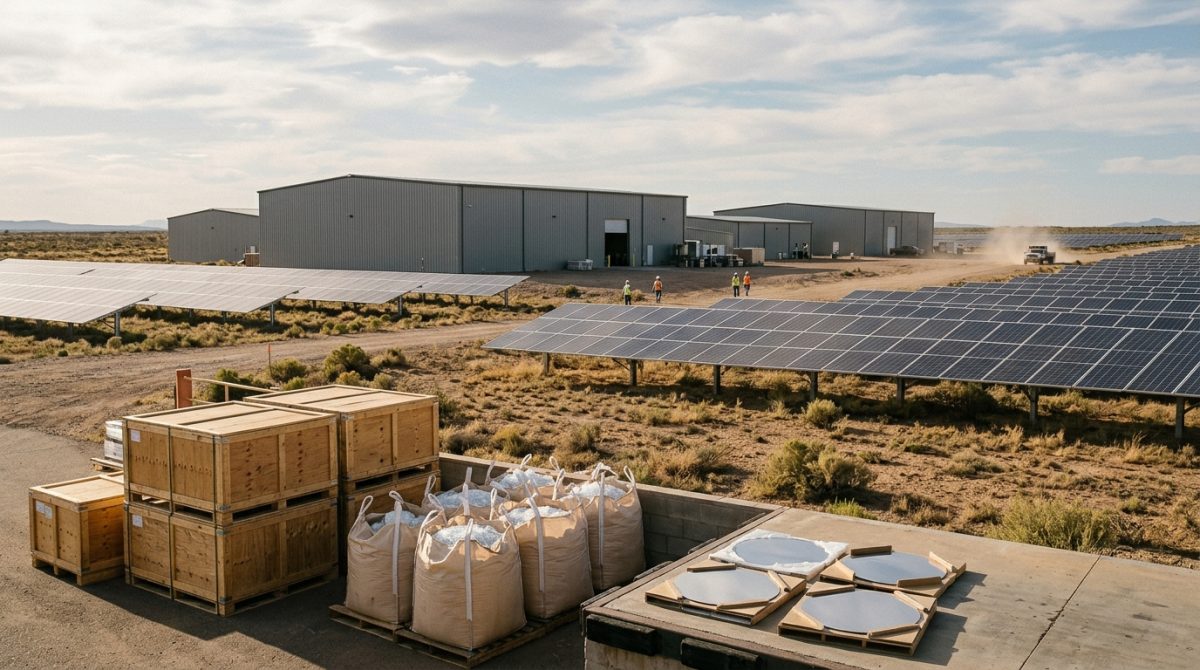
Despite these gains in module assembly, the supply chain remains incomplete. The production of upstream components, specifically photovoltaic cells, silicon wafers, and processed polysilicon, is essential for full domestic self-sufficiency. Solar cell manufacturing has seen notable success, with domestic capacity reaching 19.5 GW annually following several factory openings this year. If current projects are finalized, domestic cell production could align with 2025 deployment levels.
However, the production of polysilicon and wafers, which are more capital-intensive, is not currently tracking to match the scale of cell and module manufacturing. The long-term viability of this supply chain depends on future installation rates, which face uncertainty once federal tax credits expire. Modeling by the Rhodium Group suggests that annual solar installations could range from 8 GW to 52 GW after 2030. If the market experiences high growth, the current lack of domestic wafer and polysilicon production could hinder the industry's ability to keep pace with demand.
Beyond establishing factory capacity, manufacturers face the ongoing challenge of demonstrating sustainable, long-term operations within the United States.