US Grid Battery Failure Rates Plummet Despite Rapid Deployment Growth
Data from the Electric Power Research Institute indicates that grid-scale battery failure rates are now comparable to those of traditional substation transformers.
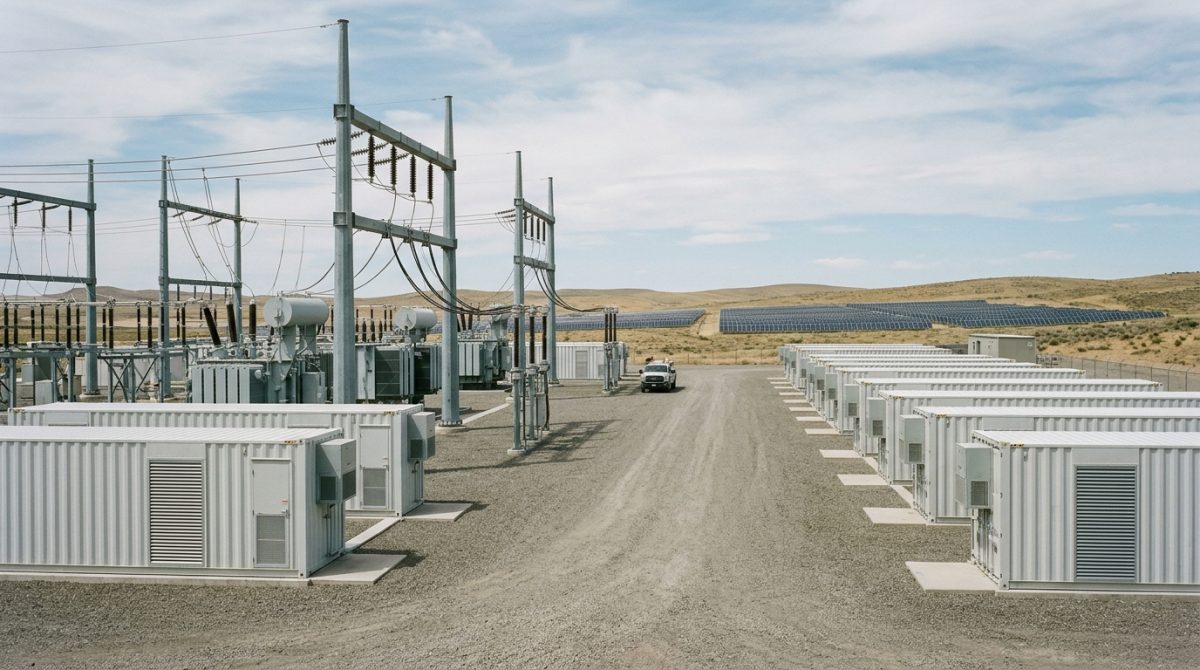
As battery storage becomes a primary solution for on-demand grid power in the United States, new data suggests that fire risks are significantly lower than public perception implies. A report from the Electric Power Research Institute (EPRI) shows that the annual failure rate for grid-scale batteries has dropped by more than 97% since 2016, even as total cumulative deployments have increased 250-fold.
The decline in failure rates is attributed to the implementation of stricter safety standards, more sophisticated battery technology, and improved project layouts. According to the EPRI, the frequency of battery failures is now comparable to that of oil-filled substation transformers, which are established components of the power grid. Lead author Lakshmi Srinivasan noted that while battery projects face intense public scrutiny, they are no more prone to failure than these legacy assets.
The dataset, which tracks arc flash, fire, and explosion events, recorded zero failures in three separate years over the last decade. Despite this downward trend, the report acknowledges that the sample size remains small, making it difficult to build a highly robust analysis. While most incidents have been minor, the report highlights notable events such as the 2019 incident near Phoenix, which caused injuries to emergency responders, and the 2025 fire at the Moss Landing facility in California.
The EPRI findings are intended to assist communities in evaluating the risks and benefits of battery installations. Beyond grid reliability and potential downward pressure on electricity costs, these projects can provide local tax revenue. Researchers suggest that as the technology matures, the data may help shift the public conversation toward a more accurate understanding of battery safety compared to other common grid infrastructure.