Global Grid Battery Installations Surge To Record Highs
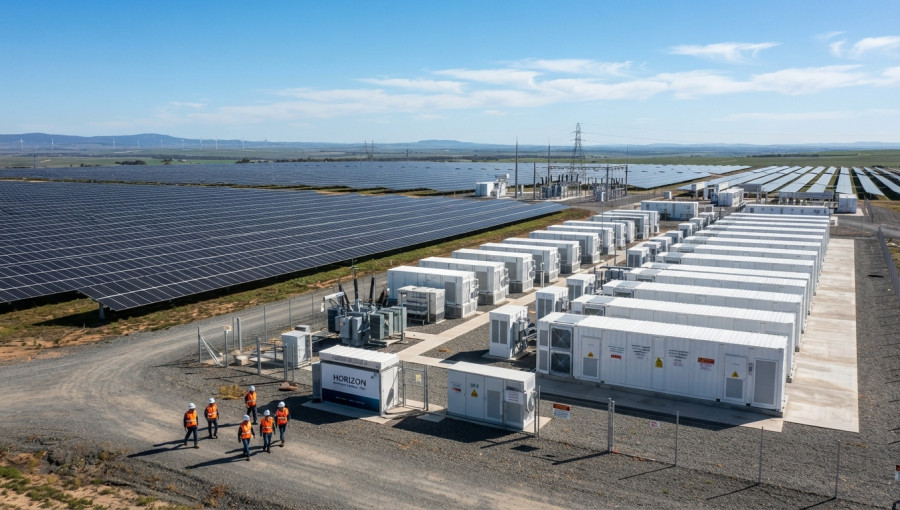
The global transition toward renewable energy reached a significant milestone in 2025 as grid battery installations surged by 48% year-over-year. According to recent data from BloombergNEF, the world added a record 112 gigawatts of storage capacity, marking a tenfold increase since 2021. This rapid expansion, led predominantly by China and the United States, is narrowing the gap between solar generation and storage capabilities. Driven by a 90% decline in lithium-ion battery costs over the last 15 years, the sector is poised for continued growth through 2030 as energy demand from data centers and electric vehicles rises.
While solar power has led the renewable charge for years, grid-scale storage is now catching up at an unprecedented pace. The 112 gigawatts of battery capacity commissioned in 2025 represents a massive leap forward in the world's ability to manage intermittent energy sources. China continues to dominate the market, accounting for more than half of all new installations last year. The United States followed as the second-largest market, contributing 16% of the global total.
Other regions are also experiencing explosive growth. Australia, benefiting from high solar penetration, saw its battery installations increase sixfold. In the United Kingdom, the storage market nearly doubled to 2.6 gigawatts following the closure of its final coal-fired power plant in 2024. Sub-Saharan Africa emerged as a significant growth hub, with installations quintupling to reach 4.3 gigawatts. This global momentum is fundamentally changing the relationship between energy generation and storage; while the ratio of solar to storage was 56-to-1 a decade ago, it dropped to 6-to-1 last year and is expected to reach 4-to-1 by the end of 2026.
The primary catalyst for this boom is the dramatic reduction in technology costs. Lithium-ion battery prices have plummeted by more than 90% over the past 15 years, making large-scale storage economically viable. These systems are becoming essential for balancing the grid as more wind and solar power are integrated, allowing operators to stockpile excess energy during peak production and release it when the grid needs it most.
Looking ahead, the demand for reliable storage is expected to intensify. The expansion of energy-intensive data centers and the widespread electrification of transport and heating systems are placing new pressures on power grids. BloombergNEF projects that the world will install 158 gigawatts of batteries in 2026. Although the growth rate may stabilize slightly in the following years, annual additions are forecast to exceed 200 gigawatts by 2030, ensuring that storage remains a cornerstone of the global strategy to reduce CO2 emission levels and modernize energy infrastructure.