
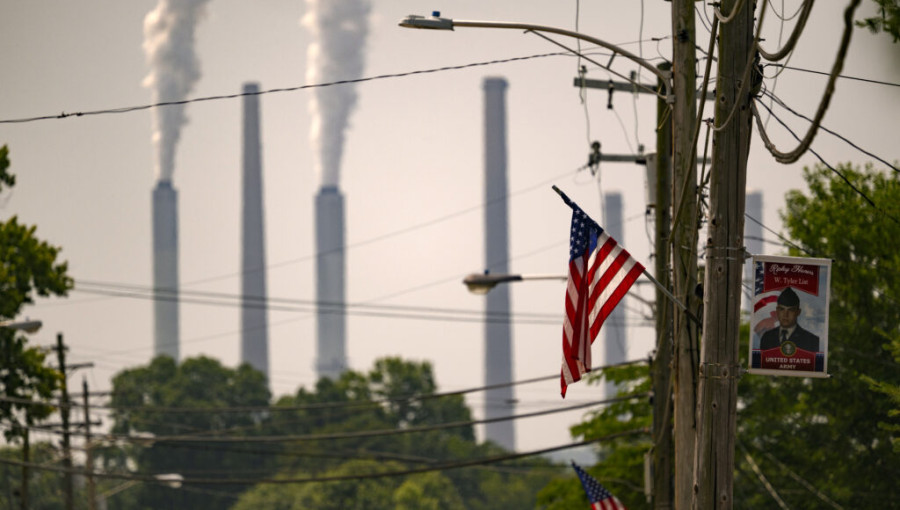
The burning of fossil fuels is linked to approximately 300,000 premature deaths in the United States annually, according to research from Harvard University. Dr. Vanessa Kerry, a leading global health expert, warns that the health consequences of air pollution and climate change represent both a medical crisis and a massive economic burden. With global deaths reaching up to 8 million per year, the financial toll includes hundreds of billions in lost productivity. Experts argue that prioritizing public health through stricter regulations could offer significant economic returns while addressing deep-seated social inequities.
In the 1990s, the landmark “Six Cities” study first highlighted the lethal connection between coal plant emissions and respiratory health. Decades later, the scale of the crisis has expanded significantly. Current data suggests that fine particulate matter from fossil fuels is responsible for 300,000 domestic deaths each year. Globally, this figure rises to between 7 and 8 million. These microscopic particles do more than damage lungs; they are small enough to enter the bloodstream, triggering heart attacks, strokes, and chronic hypertension.
Dr. Vanessa Kerry, director of Harvard’s Global Health and Climate Policy program and a special envoy for the World Health Organization, emphasizes that the climate debate must shift toward health and economics to resonate with the public. Beyond the tragic loss of life, the U.S. economy is currently losing an estimated $100 billion in productivity due to extreme heat, a figure projected to reach $500 billion within the next two decades. Kerry notes that health issues, such as a parent missing work to care for a child with an asthma attack, represent a direct hit to household incomes and national economic stability.
The discussion comes amid a controversial shift at the U.S. Environmental Protection Agency (EPA), which has reportedly ceased calculating healthcare savings derived from air pollution regulations. Kerry argues this move obscures the true value of environmental protection and benefits only a few stakeholders. According to previous data, every dollar invested in reducing fine particulate matter yields up to $77 in health-related benefits. By ignoring these metrics, critics argue that the government is failing to provide a comprehensive picture of how climate action serves as a financial and social victory.
The impact of pollution is not distributed evenly, creating a “deprivation gradient” where the most vulnerable populations—often low-income communities and people of color—face the harshest conditions. These groups frequently reside in “heat deserts” or areas with higher concentrations of fossil fuel infrastructure, further entrenching cycles of poverty. The World Bank estimates that 44 million people could fall into poverty over the next 20 years due to the health impacts of climate change alone.
Furthermore, Kerry points to the “insidious disease” of misinformation, comparing the current climate skepticism to the confusion seen during the COVID-19 pandemic. She stresses that the destruction of trust in science is leading to widespread anxiety and mental health challenges. Addressing these issues requires a fact-based narrative that treats health as a powerful investment for economic growth and human security, rather than an optional secondary concern.