
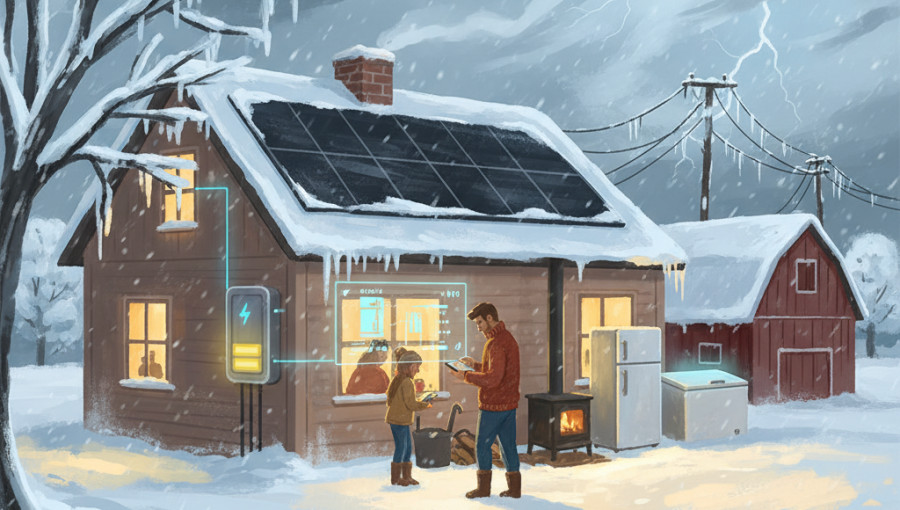
As severe winter weather increasingly threatens the stability of the electrical grid, rural homeowners are reevaluating their energy independence strategies. Unlike suburban areas where outages are typically resolved within hours, rural communities often face multi-day blackouts as utility crews prioritize high-density urban centers. To combat these prolonged disruptions, residents are turning to integrated solar panel and battery storage systems. Proper sizing is essential, focusing on balancing daily energy consumption with the specific power output required to run critical appliances like well pumps and heating systems during extreme conditions.
For those living outside city limits, a winter storm warning is more than a weather alert; it is a signal of potential isolation. When ice and heavy snow damage infrastructure, the vast distances between service points in rural regions mean restoration can frequently take between two to four days. While many residents have already installed rooftop solar panels on homes and barns, these systems generally fail to operate during a grid outage unless they are paired with a dedicated battery. This technical reality has shifted the conversation from mere energy savings to essential damage control.
Determining the appropriate battery size begins with a clear understanding of energy metrics. Household electricity use is measured in kilowatt-hours (kWh), representing total consumption over time. For instance, a home consuming 900 kWh per month averages about 30 kWh daily. However, during a winter emergency, the U.S. Department of Energy recommends narrowing the focus to “critical loads”—essential devices such as refrigerators, well pumps, and basic lighting—to reduce daily demand to a more sustainable baseline of approximately 12 kWh.
A common pitfall in system design is the confusion between energy capacity and power output. While the capacity (kWh) dictates the total duration of the backup, the power output (kW) limits how many appliances can run simultaneously. Some high-capacity batteries provide only 3–5 kW of output, which may be insufficient for high-draw items if used at the same time. Homeowners must learn to prioritize their loads, understanding that the intermittent use of heavy appliances can significantly extend the life of a battery charge during a prolonged outage.
System efficiency remains a cornerstone of successful off-grid operation. Modern installations, such as a 6.5 kW solar array paired with 22.8 kWh of storage, can sustain a household for extended periods if the building is designed for high efficiency. By monitoring daily production and shifting heavy energy tasks to peak sunlight hours, rural residents can maintain essential services even when the grid remains dark for several days. Industry experts recommend obtaining multiple independent quotes and consulting with financial advisors before committing to these significant home infrastructure upgrades.