
Estonia added 105 MW of solar capacity in 2025, bringing its cumulative total to approximately 1,430 MW. While this marks a significant decrease from the record-breaking 513 MW installed in 2024, the Estonian Chamber of Renewable Energy notes the market is transitioning toward a mature phase. Current growth is shifting from residential installations to large-scale utility projects, with a growing emphasis on integrating battery storage systems to mitigate market saturation and fluctuating electricity prices. Future expansion now depends on increased electrification and industrial demand.
According to data from the Estonian Chamber of Renewable Energy, the 105 MW installed last year reflects a cooling period following a decade-long boom. Silver Sillak, the chamber’s director, attributed the sector’s historical growth to supportive government policies, falling technology costs, and simplified permitting processes. Despite the year-on-year slowdown, the 53 MW Pihlaka solar park in Anija emerged as the largest project commissioned in 2025, signaling a continued interest in utility-scale developments.
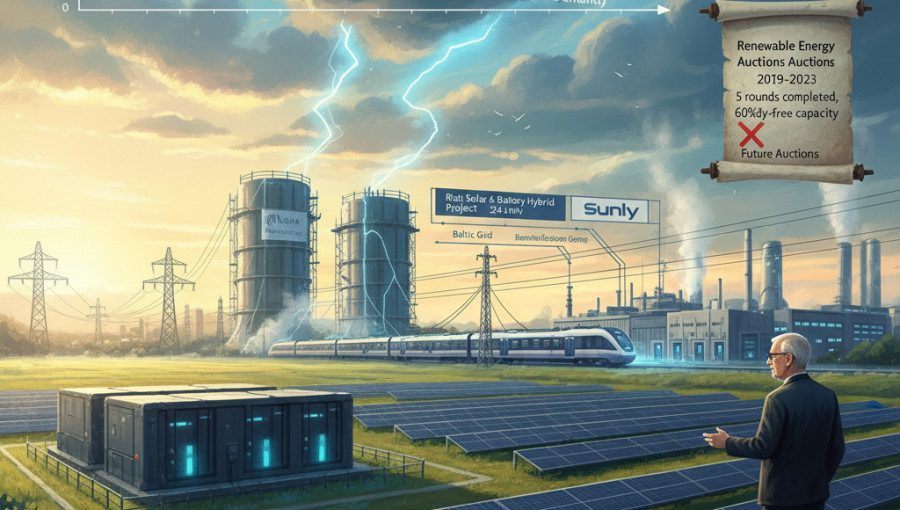
The market is currently grappling with saturation, evidenced by electricity spot prices during peak sunny hours averaging €46.00/MWh—roughly half the annual average. Frequent negative pricing during periods of high production is incentivizing developers to pair solar parks with battery storage to stabilize returns. A prime example is the 244 MW Risti solar and battery hybrid project currently under construction by Sunly, which is expected to bolster capacity figures upon its completion this summer. Additionally, the 77.5 MW Kirikmäe solar project recently began integrating a 55 MW/250 MWh battery energy storage system.
Estonia’s solar landscape has matured to the point where 60% of its capacity has been developed without state subsidies. Previous renewable energy auctions held between 2019 and 2023 successfully stimulated small-to-medium projects, but no further auctions are currently planned. However, new challenges have emerged following the Baltic states’ desynchronization from the Russian power grid. The transition to the Continental Europe grid in early 2025 introduced new balancing fees to maintain frequency, which has impacted the revenue streams of several existing solar projects.
To sustain long-term growth, industry experts suggest that Estonia must accelerate the electrification of its transport, heating, and industrial sectors. Attracting new industrial investments is viewed as a vital step toward creating a robust market for solar power purchase agreements. By increasing domestic demand for clean energy, the country can offset current price volatility and continue its transition away from fossil fuel reliance.