
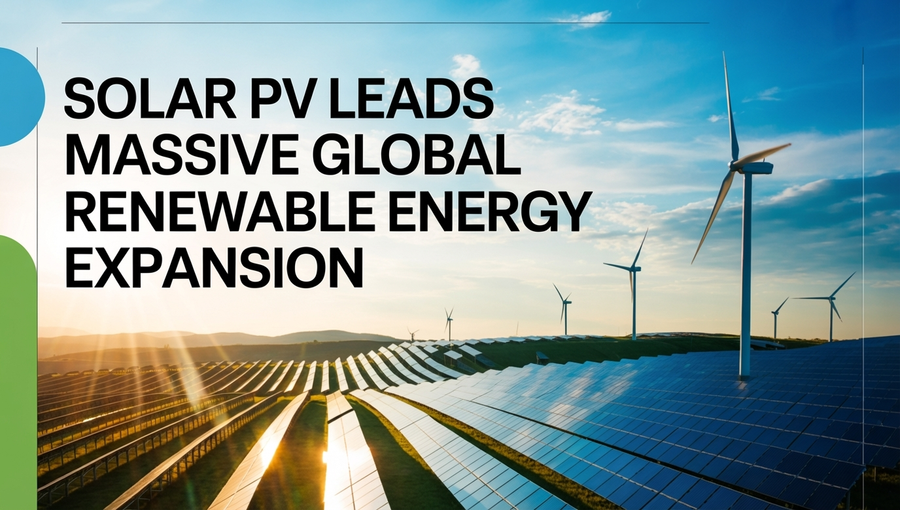
Global renewable energy capacity is projected to more than double, reaching 8.4 TW by 2031, with solar PV emerging as the primary catalyst for this expansion. According to a recent report by GlobalData, solar installations are expected to hit nearly 6 TW by the end of the decade, representing a compound annual growth rate of 13% from 2025 levels. This surge is fueled by decreasing technology costs and aggressive energy transition policies. While the Asia-Pacific region continues to dominate deployment, the integration of artificial intelligence is becoming vital for optimizing modern power grids.
The “Renewable Energy: Strategic Intelligence” report highlights that solar power has officially taken the lead in the global push for decarbonization. By 2025, solar PV generation reached 2,800 TWh, successfully overtaking wind power, which produced 2,770 TWh. In terms of infrastructure, solar accounted for over 56% of the world’s total renewable capacity in 2025, with more than 2.5 TW already installed. Wind followed at 33.5%, while bioenergy maintained a smaller share of approximately 5.3%.
The Asia-Pacific region remains the powerhouse of this expansion. By 2025, the region hosted 1,550 GW of solar capacity and nearly 700 GW of wind capacity. China remains the undisputed leader, generating 1,150 TWh of solar electricity—roughly 41% of the global total. The United States and India follow as the next largest producers, contributing 486 TWh and 189 TWh respectively.
However, the report warns of an uneven transition across different markets. While momentum remains strong globally, policy shifts in the United States under the Trump administration could potentially slow domestic renewable support. Conversely, deployment in other international markets shows no signs of decelerating, supported by long-term climate targets.
Technology is also reshaping the sector, particularly through the rise of artificial intelligence. AI is increasingly utilized to refine renewable generation forecasting, manage energy storage dispatch, and synchronize smart grid operations. Furthermore, the rapid expansion of AI-driven data centers is creating significant new demand for large-scale electricity, further necessitating the rapid build-out of renewable assets to meet rising consumption.