
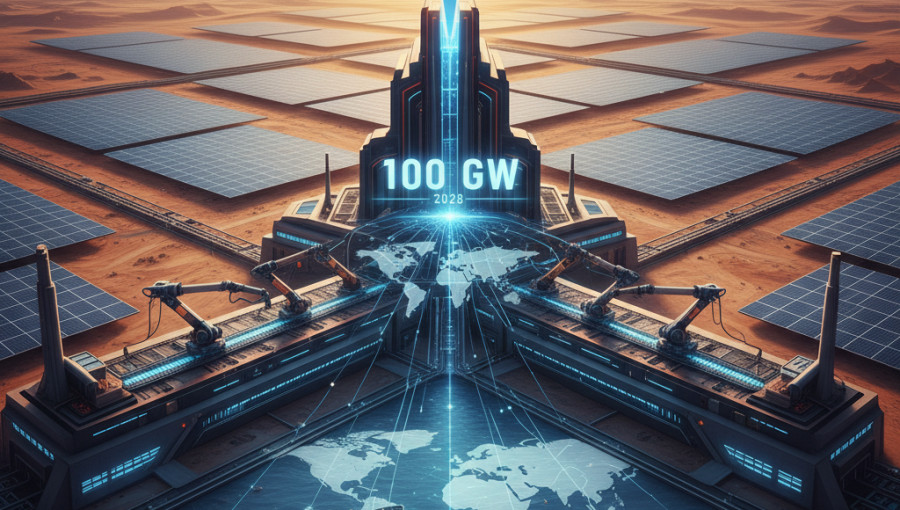
Tesla is aggressively expanding its domestic solar footprint, aiming to establish 100 GW of solar manufacturing capacity in the United States by 2028. Recent job listings and reports of a multi-billion dollar equipment deal with Chinese suppliers signal a major scale-up from the company’s current production levels. The initiative, previously hinted at by CEO Elon Musk, positions the company as a potential leader in the American renewable energy supply chain, with significant infrastructure investments expected to bolster operations in Texas and California.
Recruitment efforts on Tesla’s official website have confirmed the company’s massive ambitions. A recent posting for a staff manufacturing development engineer based in Fremont, California, specifically mentions the need to design and implement equipment for high-volume energy product manufacturing. This role is described as critical to Tesla’s broader mission of accelerating the global shift toward sustainable energy solutions by developing processes at a massive scale.
To support this expansion, Tesla is reportedly negotiating a $2.9 billion purchase of specialized manufacturing machinery from several prominent Chinese technology firms. The deal is said to include screen-printing production lines and other essential hardware from Suzhou Maxwell Technologies, Shenzhen S.C New Energy Technology, and Laplace Renewable Energy Technology. Reports suggest these suppliers have been instructed to deliver the equipment to Texas by this autumn, though the deal still requires export clearance from the Chinese Ministry of Commerce.
CEO Elon Musk previously articulated this 100 GW target during an interview at the World Economic Forum, suggesting the ramp-up could be achieved within a three-year timeframe. While Tesla has already begun producing its own solar panel units at its Gigafactory in New York—currently operating at an annual capacity of approximately 300 MW—the new 100 GW goal represents a monumental leap in production capability. This strategy aligns with the company’s efforts to secure a robust, domestic supply chain for its energy division as it transitions toward large-scale manufacturing.