Tesla Semi Upgrades Match Diesel Truck Payload Capacity
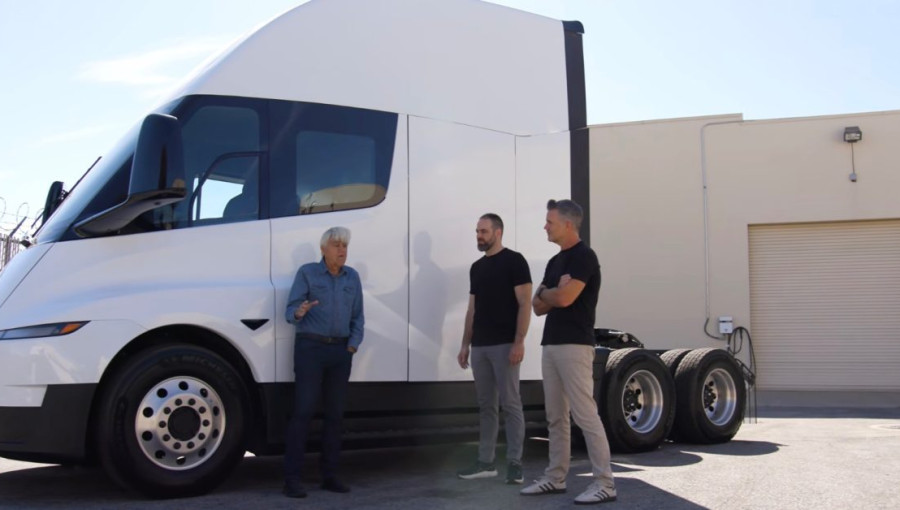
Tesla has revealed significant technical advancements for its Semi truck, claiming the electric vehicle features a battery designed to last 1.6 million kilometers. During a detailed tour with Jay Leno, program lead Dan Priestley explained how engineering refinements and a 454-kilogram weight reduction have brought the long-range model to payload parity with traditional diesel trucks. With a dedicated factory in Nevada targeting an annual production of 50,000 units, Tesla aims to revolutionize heavy-duty transport through superior aerodynamics, shared Cybertruck architecture, and significantly lower operating costs.
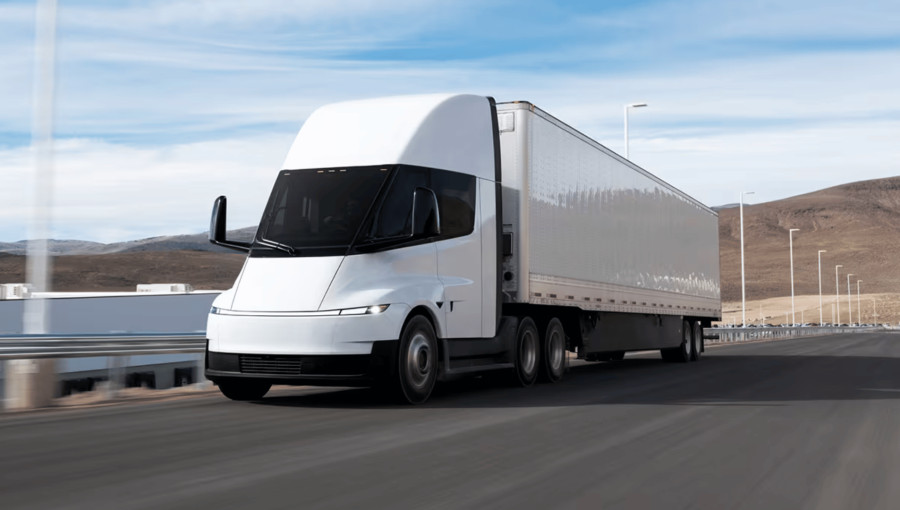
The primary challenge for electric heavy-duty vehicles has historically been the weight of the battery pack, which often reduces the maximum cargo capacity. However, Priestley confirmed that Tesla has successfully trimmed approximately 454 kilograms from the truck’s design. When combined with a 907-kilogram federal weight exemption for electric vehicles, the 805-kilometer long-range version now matches the hauling capacity of conventional diesel Class 8 trucks. Current customers are already utilizing the vehicle to transport 20,412-kilogram payloads on a daily basis.
Efficiency has been further bolstered by a 7% improvement in aerodynamics, bringing the drag coefficient down to approximately 0.4. This is notably lower than many high-performance sports cars. Practical updates have also been integrated into the cabin, such as "drop glass" windows that fully retract, replacing the previous tilt-out design. This change specifically addresses the needs of drivers who must frequently interact with gate terminals or exchange paperwork at shipping yards.
The engineering of the powertrain avoids the use of a traditional multi-speed transmission. Instead, the Semi utilizes two distinct rear axles with specialized gearing. A "torque axle" provides the necessary power for heavy acceleration and steep inclines, while an "efficiency axle" takes over during highway cruising. To minimize mechanical drag, the torque axle completely disengages when the vehicle reaches stable speeds, solving the traditional trade-off between low-speed pulling power and high-speed energy efficiency.
The Semi shares a substantial portion of its internal architecture with the Cybertruck, utilizing the same 4680 cell technology, stator, and inverter designs. It also adopts a 48-volt low-voltage system, which drastically reduces the weight of the internal wiring. For steering, the truck employs reinforced electric assist actuators from the Cybertruck line, though it retains a physical steering shaft. The braking system uses electronically controlled brake-by-wire technology to ensure seamless integration with standard pneumatic trailers.
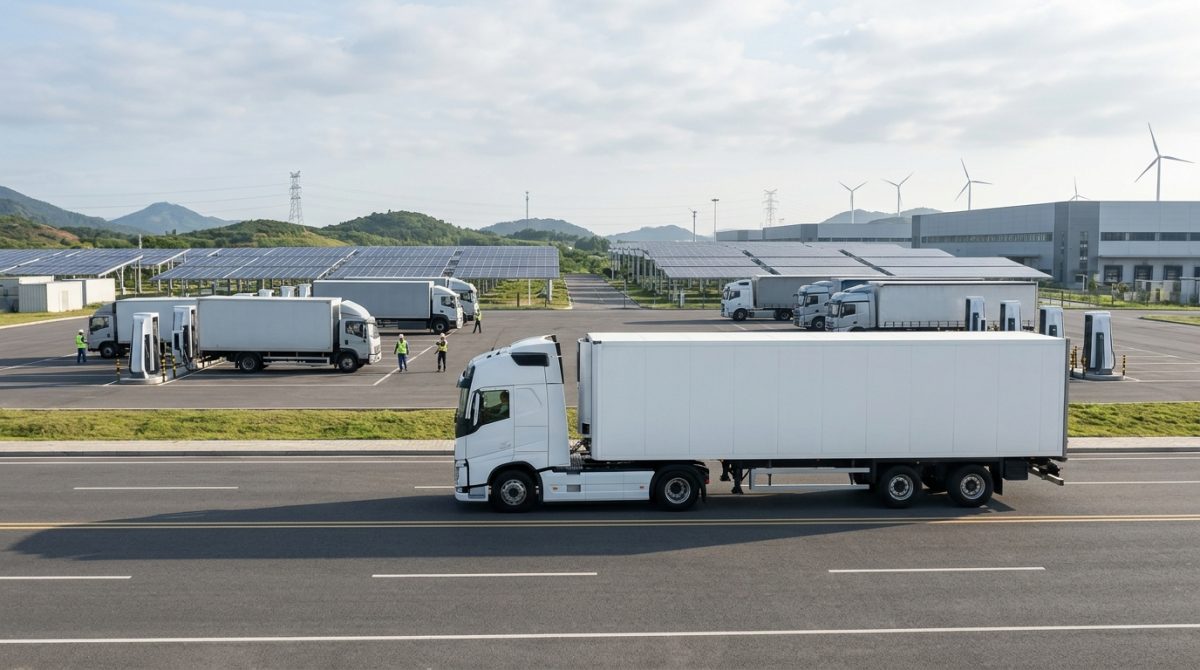
On the charging front, the Semi is capable of 1.2-megawatt charging speeds, allowing it to recover 60% of its battery—equivalent to roughly 483 kilometers of range—in just 30 minutes. Tesla is also utilizing Cybertruck power electronics to provide electricity directly to refrigerated trailers, eliminating the need for noisy and polluting diesel "pony motors." This integration simplifies the logistics of temperature-controlled transport while further reducing the vehicle's carbon footprint.
The economic argument for the transition is compelling, with the Semi reportedly 50% cheaper to operate per kilometer in terms of energy costs compared to diesel in high-cost regions like California. Nationally, the total cost of ownership is estimated to be 20% lower. Tesla’s test fleet has already covered more than 21.7 million kilometers, with the most utilized truck nearing 708,000 kilometers of service. As the company prepares to scale production at its Reno facility, it faces a market where competitors are struggling with higher price points and more limited range.