
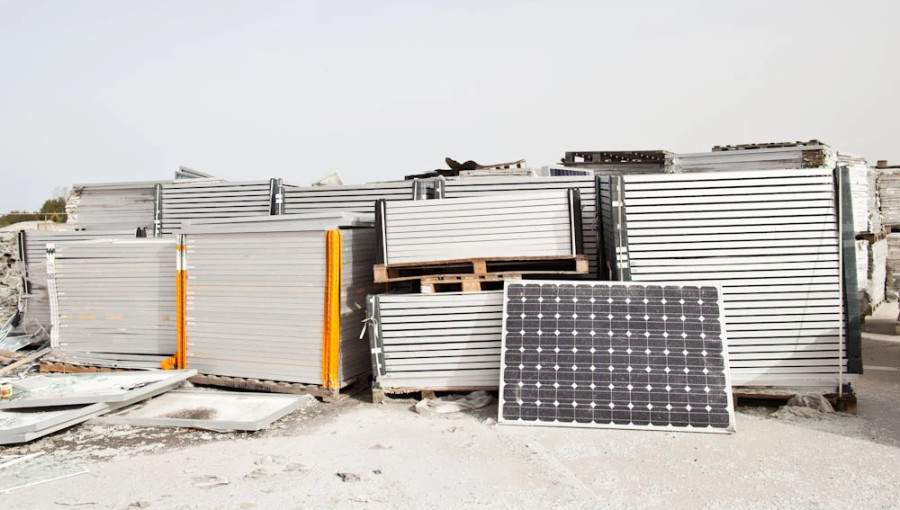
Europe faces a looming waste crisis as its solar recycling infrastructure fails to keep pace with the rapid expansion of renewable energy. A recent study by the University of Murcia and the European Commission’s Joint Research Centre reveals that while annual waste could reach 2.2 million tonnes by 2050, current capacity sits at just 170,000 tonnes. Experts warn that the European Union’s regulatory framework is too fragmented to manage this surge, necessitating urgent reforms to harmonize recycling standards and scale up industrial facilities to ensure a sustainable green transition.
The research highlights a significant discrepancy between the European Union’s ambitious decarbonization goals and its ability to process end-of-life solar hardware. As member states accelerate the deployment of solar panels to meet climate targets, the infrastructure required to decommission and recycle these units remains woefully inadequate. Projections suggest that by 2050, the volume of waste will be more than twelve times the current processing capacity, creating a “significant capacity gap” that could undermine the environmental benefits of solar energy.
Germany, France, Spain, and Italy are identified as the primary sources of this growing waste stream. Germany, the continent’s largest solar market, is expected to generate approximately 681,800 tonnes of waste annually by mid-century. However, its current recycling infrastructure can only handle 99,000 tonnes per year. This pattern of undercapacity is mirrored across other major European markets, suggesting that waste volumes may materialize much sooner than previously anticipated as older installations are decommissioned or replaced.
The study points to the “incomplete and fragmented” nature of the EU’s regulatory environment as a major hurdle. Although solar modules have been covered under the Waste Electrical and Electronic Equipment (WEEE) Directive since 2012, implementation varies wildly between nations. Many member states lack dedicated waste streams for solar technology, robust enforcement mechanisms, or accurate tracking systems. This inconsistency discourages investment and creates logistical barriers, such as high transportation costs caused by the geographic concentration of recycling plants in only a few regions.
To bridge this gap, researchers propose a comprehensive overhaul of the current system. Key recommendations include the introduction of a “recyclability index” to encourage the design of a solar module that is easier to dismantle. The study also calls for the standardization of “extended producer responsibility” (EPR) fees and the implementation of mandatory digital product passports for every solar panel. These tools would improve traceability and ensure that manufacturers are held accountable for the entire lifecycle of their products.
Furthermore, the report suggests that EU funding, including resources from Horizon Europe, should be directed toward establishing regionally distributed recycling hubs. This would reduce the logistical burden of moving heavy waste across borders and ensure that all member states have access to recovery facilities. By looking at international models, such as China’s standardized R&D programs or Australia’s landfill bans, the EU can develop a more cohesive strategy to recover critical materials and maintain its strategic autonomy in the renewable energy sector.
Without immediate and decisive policy action, the study concludes that the EU risks a massive accumulation of unmanaged waste. The failure to scale up recycling infrastructure could lead to the loss of valuable raw materials and environmental leakage. As solar power reaches record-breaking contributions to the European energy mix, the sustainability of a terawatt-scale future will depend heavily on the transition to a circular economy for solar components.