
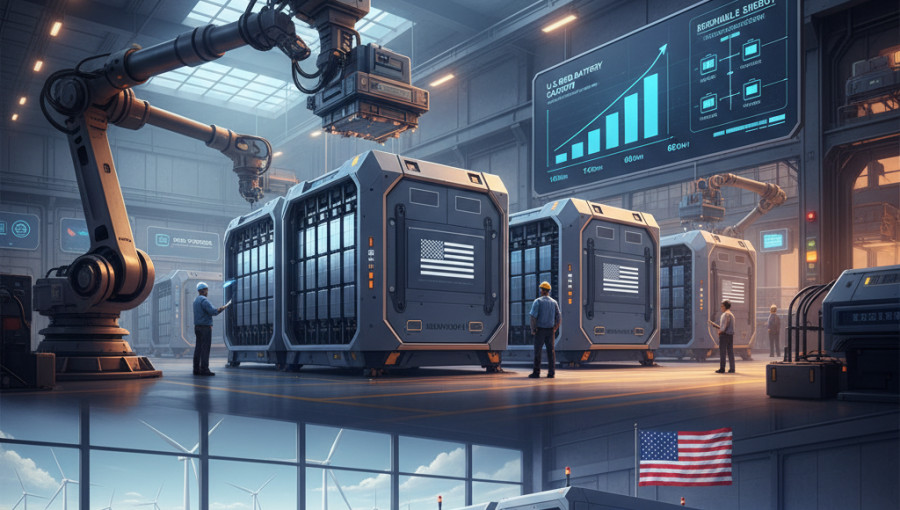
The United States has achieved a significant milestone in energy independence, reaching full self-sufficiency in the production of grid-scale batteries. Driven by legislative incentives and a strategic pivot from the electric vehicle sector, domestic manufacturing capacity is now poised to exceed local demand. This rapid industrial expansion not only reduces reliance on overseas imports but also accelerates the integration of renewable energy and supports the power-hungry expansion of data centers. By the end of this year, the U.S. will produce enough battery cells and enclosures to meet 100% of its energy storage needs.
The U.S. energy landscape is undergoing a dramatic transformation as domestic battery manufacturing scales at an unprecedented rate. According to recent data from the U.S. Energy Storage Coalition, the nation now possesses the industrial capacity to fulfill all domestic requirements for energy storage projects with American-made systems. This represents a monumental shift from just 18 months ago, when the majority of these systems were imported, primarily from China.
Grid batteries have become a cornerstone of the modern electrical infrastructure, representing approximately 28% of all new power plant capacity scheduled for completion this year. This surge is fueled by the need to stabilize renewable energy sources and the massive power requirements of the expanding artificial intelligence and data center industries. Unlike the solar industry, which still relies heavily on imported solar cells despite domestic solar module assembly, the battery sector is achieving autonomy across the higher-value segments of its supply chain, including the battery cells themselves.
The catalyst for this industrial boom was the 2022 Inflation Reduction Act, which provided robust incentives for domestic production. Interestingly, the scale-up was further accelerated by shifts in the automotive market. As the outlook for electric vehicle sales fluctuated and policy adjustments impacted consumer credits, major manufacturers like LG Energy Solution, Ford, and General Motors began repurposing their EV battery facilities for grid storage. For example, LG is currently converting plants in Tennessee and Michigan to produce grid batteries, a move that is restoring hundreds of jobs and securing multi-billion dollar supply deals with companies like Tesla.
By the conclusion of 2025, U.S. factory capacity for finished storage systems is expected to reach 145 gigawatt-hours, far exceeding the projected annual installation rate of 60 gigawatt-hours. While the country still faces challenges in sourcing raw materials—an area where China maintains a dominant position—the localization of assembly and cell production is already yielding significant benefits. Industry leaders note that domestic supply chains significantly reduce project lead times and delivery uncertainty, providing the “speed to power” necessary to meet the urgent energy demands of the modern era.