
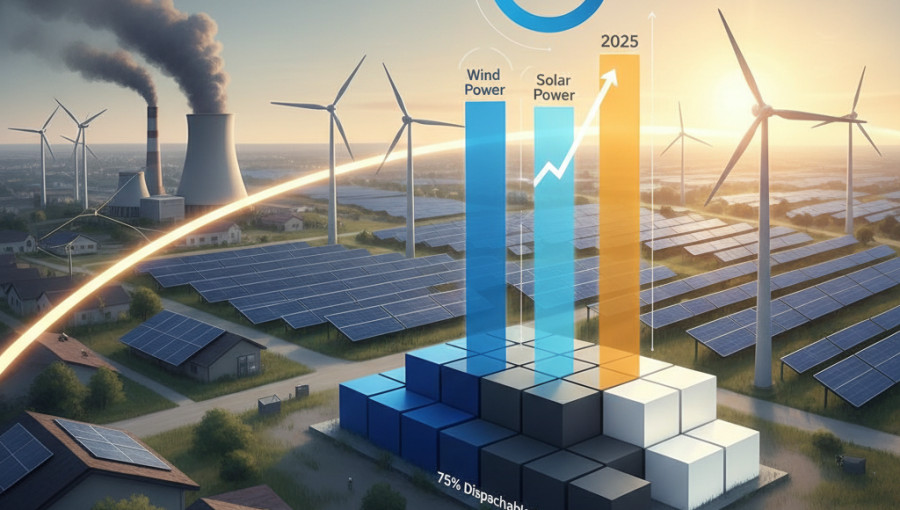
Wind and solar power reached a historic milestone in 2025, accounting for 17% of total U.S. electricity generation. This represents a significant leap from two decades ago, when these renewable sources contributed less than 1% of the nation’s power. According to the U.S. Energy Information Administration (EIA), combined output from wind and utility-scale solar reached 760,000 gigawatthours (GWh) last year, marking an 88,000 GWh increase over 2024. This growth underscores the rapid transformation of the American energy landscape as solar capacity continues its aggressive annual expansion.
The surge in renewable energy is largely driven by a massive uptick in solar deployment. Utility-scale solar power generation, which includes facilities with at least 1 megawatt of capacity, reached 296,000 GWh in 2025—a 34% increase compared to the previous year. This sector has maintained a consistent growth trajectory every year since 2006. Meanwhile, wind power remained the larger contributor of the two, generating 464,000 GWh, reflecting a steady 3% rise from 2024 levels.
Beyond large-scale installations, small-scale solar generation also saw notable gains. These decentralized systems produced 93,000 GWh in 2025, an 11% increase from the prior year. When combining both utility-scale and small-scale solar with wind power, the total share of these renewables rises to 19% of the United States’ total net electricity generation.
Despite the record-breaking performance of renewables, traditional dispatchable energy sources continue to provide the majority of the country’s power. Because wind and solar are intermittent and dependent on weather conditions, base-load generating units—including natural gas, coal, and nuclear power—remain essential for grid stability. These dispatchable sources collectively accounted for 75% of utility-scale electricity generation across the U.S. in 2025.