
The global automotive industry is on the verge of a significant breakthrough as solid-state battery technology moves from experimental phases to real-world implementation. Leading Chinese manufacturers like Chery, Changan, and BYD are unveiling prototypes capable of exceeding 1,500 kilometers on a single charge. Simultaneously, Western companies like Factorial Energy are collaborating with major brands like Mercedes-Benz to integrate these high-density power cells. With the potential to double the range of traditional lithium-ion batteries while offering faster charging and enhanced safety, solid-state technology is poised to redefine the electric vehicle market by 2027.
Solid-state batteries, often described as the “holy grail” of electric mobility, are rapidly approaching commercial viability. By replacing liquid electrolytes with solid materials, these batteries promise higher energy density, improved safety, and significantly longer lifespans. Recent developments across the globe suggest that the era of range anxiety may soon be over, with several upcoming models targeting driving distances that far exceed current industry standards.
In China, the push toward this technology is accelerating. Chery recently showcased its “Rhino” battery series, which includes an all-solid-state cell with a remarkable energy density of 600 Wh/kg. The company claims this technology can facilitate a driving range exceeding 1,500 kilometers. Chery plans to begin vehicle testing next year, specifically with the Exeed ES8, aiming for a full mass-market launch by 2027. This follows Changan Automobile’s announcement of its “Golden Bell” battery, which also targets a 1,500-kilometer range and is scheduled for trial installations by the third quarter of 2026.
Other regional players are also making rapid gains. Dongfeng Motors has already initiated testing for a prototype battery in extreme cold conditions, boasting an energy density of 350 Wh/kg and a range of 1,000 kilometers. Meanwhile, BYD has introduced its Blade Battery 2.0. Although it utilizes lithium-iron phosphate (LFP) chemistry rather than a full solid-state design, it still achieves over 1,000 kilometers of range and supports ultra-fast charging stations capable of delivering 1,500 kW, allowing a charge from 10% to 70% in just five minutes.
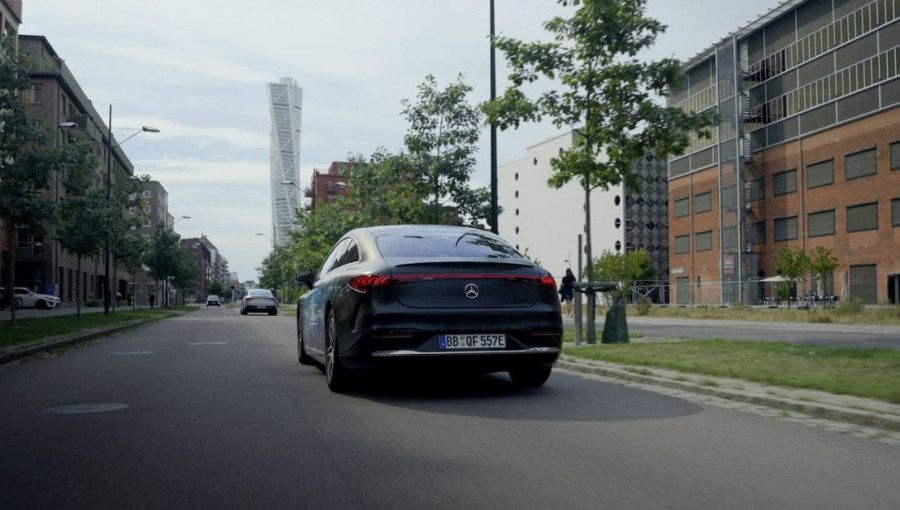
The race to dominate the next generation of energy storage is not limited to Asia. In the United States, Factorial Energy is working with Mercedes-Benz, Stellantis, and Hyundai to bring its Solstice platform to market. Factorial’s solid-state cells feature an energy density of 450 Wh/kg—roughly 80% higher than conventional lithium-ion batteries. This technology was recently highlighted when a modified Mercedes EQS completed a 1,200-kilometer test run using Factorial’s cells. The company anticipates that these power units could be integrated into production electric vehicles as early as 2027.
These advancements offer manufacturers more than just extended range; they allow for lighter vehicle architectures and more efficient use of interior space. While a 1,500-kilometer range exceeds the daily requirements of the average driver, the increased efficiency and safety of solid-state technology are expected to drive down long-term costs and accelerate the global transition toward sustainable transportation. As battery chemistries evolve, the electric vehicle market is set to become more diverse, offering high-performance options at various price points.