
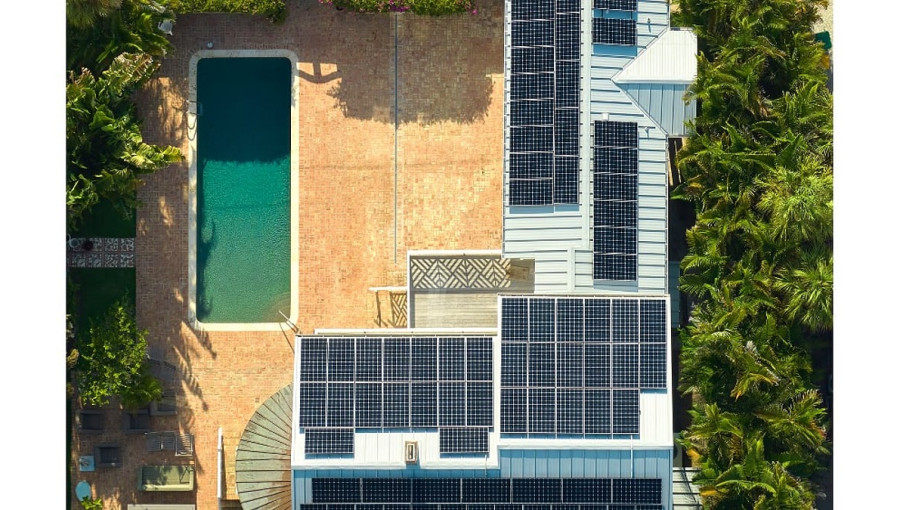
The Abu Dhabi Department of Energy (DoE) has officially launched the second phase of its Solar Energy Self-Supply Policy, extending eligibility to include residential buildings and villa owners. This expansion aims to accelerate the deployment of distributed solar panels and battery energy storage systems (BESS) throughout the emirate. By streamlining grid connections and simplifying regulatory requirements, the initiative seeks to improve overall grid efficiency while empowering residents to manage their own energy production. This development follows the initial phase, which focused primarily on the agricultural sector and private ranches.
Building on the momentum of the first phase introduced earlier this year, the updated policy allows a much broader segment of the population to participate in the city’s energy transition. While the initial stage targeted rest houses and the agricultural segment, Phase II focuses on urban residential integration. This shift is designed to enable end-consumers to generate a significant portion of their daytime electricity needs through solar power, with the option to store surplus energy in batteries for later use.
To facilitate this transition, the Abu Dhabi DoE has introduced a simplified regulatory framework. These measures are intended to remove bureaucratic hurdles, making it easier for homeowners to install solar systems and connect them to the existing power grid. Additionally, the government has established standardized technical requirements to ensure that all new installations meet rigorous safety and performance benchmarks.
Abdulaziz Mohammed Al Obaidli, the DoE’s Director General of Regulatory Affairs, emphasized that this second phase is a pivotal step in enhancing energy consumption efficiency. He noted that integrating the residential sector is essential for supporting the long-term stability and modernization of the power system. By encouraging flexible solutions for both production and consumption, the policy helps reduce the strain on the central grid during peak hours.
This residential push coincides with Abu Dhabi’s broader strategy to expand its utility-scale renewable energy footprint. Alongside distributed solar efforts, the emirate is moving forward with massive infrastructure projects, such as Masdar’s recent agreement to develop a 2.1 GW solar PV plant equipped with 7.75 GWh of energy storage. Together, these initiatives represent a multi-tiered approach to achieving the region’s clean energy objectives and reducing its overall carbon footprint.