
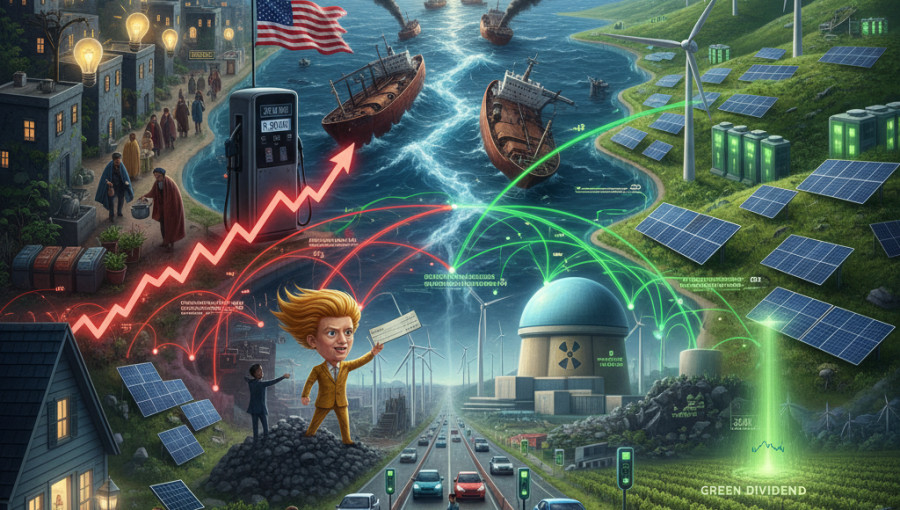
The ongoing conflict in Iran and the subsequent closure of the Strait of Hormuz have triggered a global energy crisis, driving oil and gas prices to levels not seen in years. While many nations struggle with soaring costs, those with robust renewable energy infrastructure, such as Spain and the United Kingdom, are finding significant protection against market volatility. This geopolitical instability is accelerating the global transition toward clean energy technologies, including solar panels and wind turbines, as governments and consumers seek long-term energy security away from fossil fuel dependence.
A month into the military engagement between the United States, Israel, and Iran, the strategic shipping lane of the Strait of Hormuz remains largely inaccessible. This disruption has pushed American gasoline prices to nearly $4 per gallon, a peak last observed in 2022. The impact is even more pronounced in Asia and Europe, where countries reliant on Middle Eastern natural gas have been forced to implement price caps to protect citizens from skyrocketing utility bills.
Clean energy assets are proving to be a vital economic shield. In Spain, high renewable output recently drove electricity costs to a fraction of those found in neighboring France and Germany. Similarly, the United Kingdom achieved record renewable generation this week, significantly lowering its reliance on expensive gas imports. China, despite being the world’s largest oil importer, is leveraging its massive installations of wind and solar capacity to mitigate the impact of reduced gas shipments from Qatar. Analysts suggest this crisis could permanently fast-track China’s energy transition and benefit its cleantech manufacturers, which produce the majority of the world’s solar panels and batteries.
In the United States, the Trump administration faces scrutiny over a $1 billion agreement with TotalEnergies. Under the deal, the company will abandon offshore wind leases in New York and North Carolina in exchange for a taxpayer-funded refund, with the stipulation that the capital be redirected toward gas investments. Legal experts have questioned the authority of such an arrangement, though the Coastal Virginia Offshore Wind project provided a counterpoint by successfully delivering its first power to the grid this week.
Nuclear energy is also experiencing a policy reversal across the country. Over the past few years, five states have repealed long-standing moratoriums on nuclear development, with five more currently debating similar legislative changes. This shift is bipartisan; for example, Kentucky Governor Andy Beshear recently announced a $1.76 billion nuclear fuel enrichment project, reflecting a broader national effort to restart shuttered plants and deploy next-generation nuclear technology to meet rising demand.
In other developments, a massive solar panel and battery storage project proposed for California’s Central Valley aims to provide a dual benefit for farmers and the state’s power grid. Meanwhile, new data indicates that the U.S. will soon have the domestic capacity to meet its own demand for grid-scale batteries, which are expected to account for nearly a third of new power capacity this year. In Europe, grid operators have officially cleared renewable energy sources of blame for a major blackout in the Iberian Peninsula last year, attributing the failure to technical voltage issues instead.