
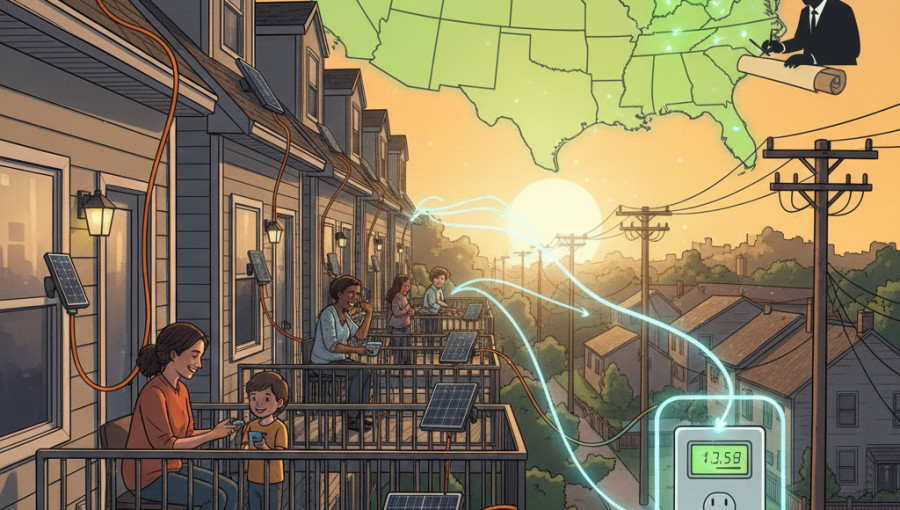
As electricity costs continue to rise across the United States, balcony solar is emerging as a popular solution for residential energy independence. Approximately half of all U.S. states are currently evaluating legislation to streamline the adoption of these plug-in DIY kits. These systems allow residents to generate power from porches or small outdoor spaces by connecting directly to standard electrical outlets. This movement gained significant momentum recently in Maine, where Governor Janet Mills signed a landmark bill into law to facilitate the use of plug-in solar technology.
The surge in interest regarding balcony solar reflects a broader push for energy affordability. Unlike traditional solar module installations that often require extensive permitting, government incentives, or utility approval, these compact systems are designed for simplicity. Proponents highlight that the kits can be installed without professional help, providing a direct way for households to lower their utility bills and manage their own energy production.
Cora Stryker, co-founder of the nonprofit Bright Saver, emphasizes that the primary driver behind this legislative push is the need to assist constituents struggling with high power demands. By allowing residents to utilize small-scale solar cell technology on their own property, lawmakers hope to provide immediate financial relief. The goal is to make renewable energy accessible to a wider demographic, including those who may not have the resources or space for a full-scale rooftop installation.
The legislative landscape is shifting rapidly across the country. In Maine, the recent signing of a plug-in solar bill marks a major milestone for the industry. The new law aims to remove barriers for residents who wish to utilize these systems to offset their energy consumption. Similar efforts are being tracked nationwide as more states recognize the potential of decentralized, consumer-led renewable energy.
While traditional solar panel arrays remain a cornerstone of the green transition, balcony solar offers a unique alternative for those living in apartments or homes with limited roof space. As long as there is access to sunlight on a balcony or patio, these systems can contribute to a reduction in overall CO2 emission levels while putting power generation directly into the hands of the consumer. This trend highlights a shift toward more democratic and accessible forms of renewable technology.