
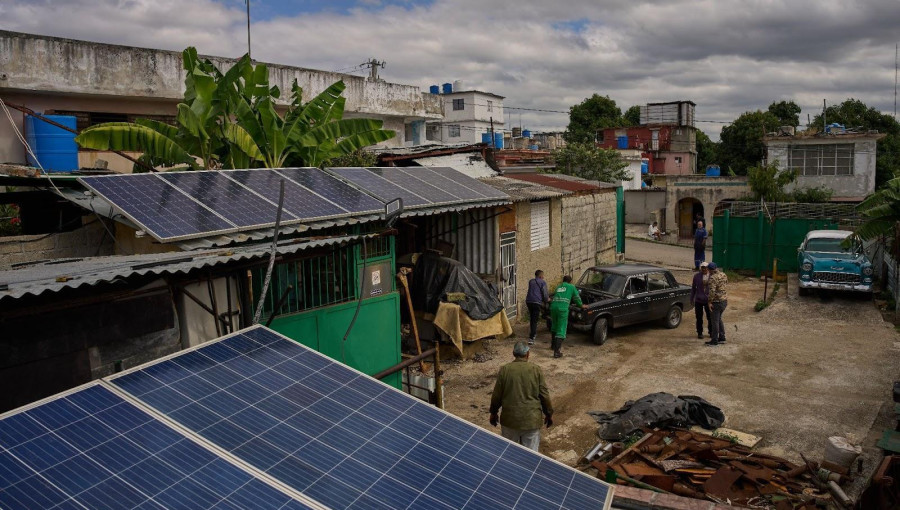
Cuba is undergoing a rapid transition to solar power as a desperate response to a collapsing national grid and a tightening U.S. fuel blockade. With oil imports severely restricted, the Caribbean nation saw its renewable energy share climb to 10% in 2025, up from just 3.6% the previous year. This shift comes amid a dire humanitarian crisis characterized by chronic blackouts, stalled healthcare services, and urban decay. While solar energy offers a vital lifeline, experts warn that significant international investment and infrastructure overhauls are required to achieve long-term energy security and a fully renewable system.
The energy landscape in Cuba has reached a breaking point following a series of executive orders from the Trump administration that imposed heavy tariffs on countries supplying oil to the island. This blockade has effectively choked off gas and diesel supplies, leaving city streets deserted and public services in a state of paralysis. In cities like La Habana and Morón, the lack of fuel for sanitation trucks has led to mountains of refuse accumulating in the streets, creating breeding grounds for disease-carrying mosquitoes and forcing residents to burn trash, further degrading air quality.
The humanitarian impact of the energy deficit is most visible in the healthcare sector. With power outages often exceeding 20 hours a day, hospitals have been forced to cancel thousands of essential surgeries. Local academic experts describe the situation as a deliberate attack on the country’s vulnerabilities, noting that the electricity shortage is not merely an economic issue but a growing threat to public health. The crisis was further exacerbated by the loss of Venezuelan oil imports and the impact of Hurricane Melissa in 2025, which exposed the extreme fragility of the national infrastructure.
Cuba’s electrical grid is frequently described as a “Frankenstein” system, composed of aging components from various countries and eras that are nearly impossible to maintain due to trade restrictions. While some critics point to government mismanagement and the prioritization of luxury hotel construction over utility repairs, the Ministry of Renewable Energy is aggressively pivoting toward solar power. In early 2026, the country hit a milestone by generating 900 megawatts of electricity from solar energy in a single day.
Currently, 34 solar farms are operational across the island, with a national goal to reach 15% renewable generation by the end of 2026. This growth is being fueled by the falling cost of clean-energy technology and an influx of affordable Chinese solar panels, which have bypassed many of the existing trade barriers. Microgrids—small-scale systems utilizing solar panels and batteries—are becoming increasingly common at private businesses and medical clinics, providing a decentralized alternative to the failing national system.
Despite the recent surge, significant hurdles remain. Economists estimate that Cuba requires approximately $8 billion in international investment to transition 93% of its grid to renewables, and up to $19 billion for a total transformation. However, the threat of U.S. sanctions continues to deter foreign investors. While the state’s control over land simplifies the installation of large-scale solar parks, the average citizen still finds the cost of residential solar systems prohibitively expensive, leaving much of the population dependent on a grid that remains on the verge of total failure.