
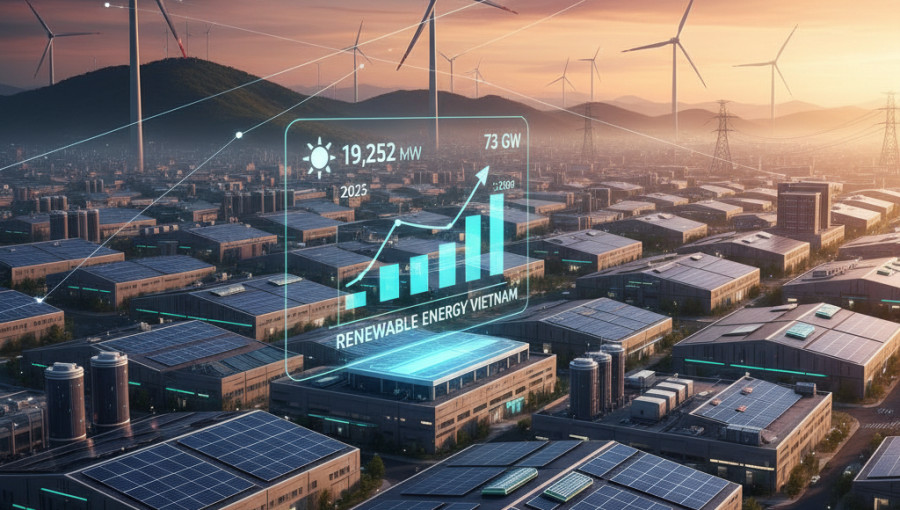
Vietnam has reached a cumulative solar capacity of 19,252 MW as of the close of 2025, according to the latest data from the International Renewable Energy Agency (IRENA). The country added 586 MW of new capacity over the year, a notable increase compared to the 79 MW installed in 2024, though still below the 1.6 GW peak recorded in 2023. While utility-scale projects grapple with grid constraints and regulatory hurdles, the commercial and industrial rooftop sectors are driving current growth, supported by evolving policies and international corporate sustainability commitments.
The recent figures, featured in IRENA’s Renewable Capacity Statistics 2026, highlight a fluctuating growth pattern since the initial solar boom triggered by feed-in tariffs in 2017. Energy analysts suggest that while the market has slowed from its previous highs, interest remains robust among commercial and industrial stakeholders. This shift toward self-consumption and rooftop installations comes as utility-scale solar faces stiff competition from established fossil fuel generation and a grid infrastructure that requires significant modernization to handle intermittent renewable energy.
Market dynamics are being shaped by both geopolitical shifts and supply chain adjustments. Many multinational corporations are expanding their manufacturing presence in Vietnam to meet Scope 2 CO2 emission targets, subsequently increasing demand for renewable energy. Furthermore, the availability of affordable solar panel technology, bolstered by Chinese manufacturing operations located within Vietnam, has helped maintain the economic viability of new projects despite fluctuating tariff rates.
To further stimulate the market, the Vietnamese government has introduced several regulatory reforms. A new direct power purchase agreement (DPPA) mechanism, launched in early 2025, now allows renewable energy producers to sell electricity directly to private consumers, effectively ending the long-standing monopoly of the state-owned utility, Vietnam Electricity. Additionally, a proposed decree could soon allow rooftop solar owners to sell up to 50% of their generated power back to the national grid, a significant increase from the previous 20% limit.
Looking toward the end of the decade, Vietnam has set ambitious renewable energy targets under its revised national power development plan. The country aims to achieve 73 GW of installed solar capacity and 38 GW of onshore wind by 2030. To reach these goals, experts emphasize the need for continued privatization of the electricity market, increased investment in battery energy storage systems, and enhanced grid flexibility to mitigate curtailment risks.