
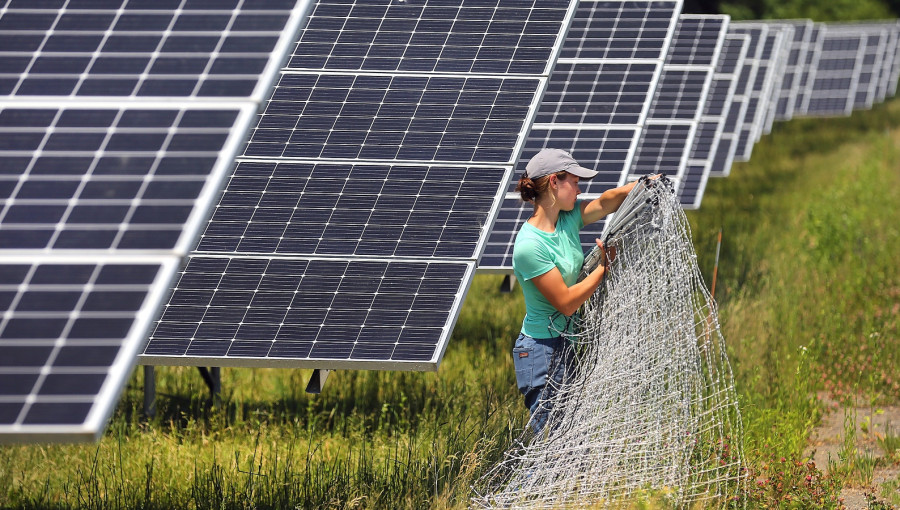
The American solar industry is experiencing a significant surge in growth, defying political rhetoric and regulatory challenges that many feared would stall the transition to clean energy. Driven by the massive power demands of data centers and a growing recognition of its cost-effectiveness, solar and battery storage now dominate new utility-scale energy generation. Even within conservative circles, a shift is occurring as proponents frame solar development as a means to achieve energy independence, compete with global rivals, and lower household electricity bills amid rising economic pressures and volatile global fuel markets.
Despite initial fears that the gutting of the Inflation Reduction Act and new Interior Department regulations would stifle the market, recent data tells a different story. According to the Rhodium Group’s Clean Investment Monitor, solar and battery storage accounted for 79 percent of all new power generation brought online in 2025. This sector is expected to grow by an additional 49 percent before existing tax credits expire at the end of 2027. While the wind industry has faced more significant hurdles, solar has remained resilient, even securing approvals for major projects on federal land that were previously stalled.
The shifting political landscape has played a crucial role in this continued expansion. Although renewable energy has often been a flashpoint in partisan culture wars, affordability is proving to be a powerful bridge. A recent poll conducted by GoodPower and the University of Chicago found that 69 percent of Republicans support solar energy when it is linked to lower electricity costs. High-profile conservative figures have also begun to champion the technology, citing the necessity of expanding solar capacity to compete with China’s energy dominance and to ensure a reliable domestic grid.
A massive driver for this demand is the rapid proliferation of data centers. These facilities require enormous amounts of electricity, and solar offers the fastest and most cost-effective way to bring new power online. Traditional natural gas plants are currently facing severe delays due to a shortage of gas turbines, with procurement backlogs lasting between five and nine years. This bottleneck has forced even the oil and gas industry to collaborate with renewable energy providers to meet the urgent energy requirements of the tech sector.
However, the industry still faces significant administrative obstacles. While development on private land is thriving, projects on federal land are often slowed by local permitting and interconnection issues. To address this, the House recently passed the SPEED Act, a bipartisan bill intended to streamline the permitting process by overhauling the National Environmental Policy Act. This rare moment of political alignment reflects a growing consensus that modernizing the grid is essential for economic stability.
Geopolitical tensions and domestic economic strain are further accelerating the transition. With global oil prices fluctuating due to conflicts in the Middle East and one-third of American households struggling to pay utility bills, solar is increasingly viewed as a tool for energy security. Experts suggest that as energy poverty worsens, the practical benefits of solar power—speed of deployment and low operating costs—are becoming impossible for policymakers to ignore, regardless of their political affiliation.