
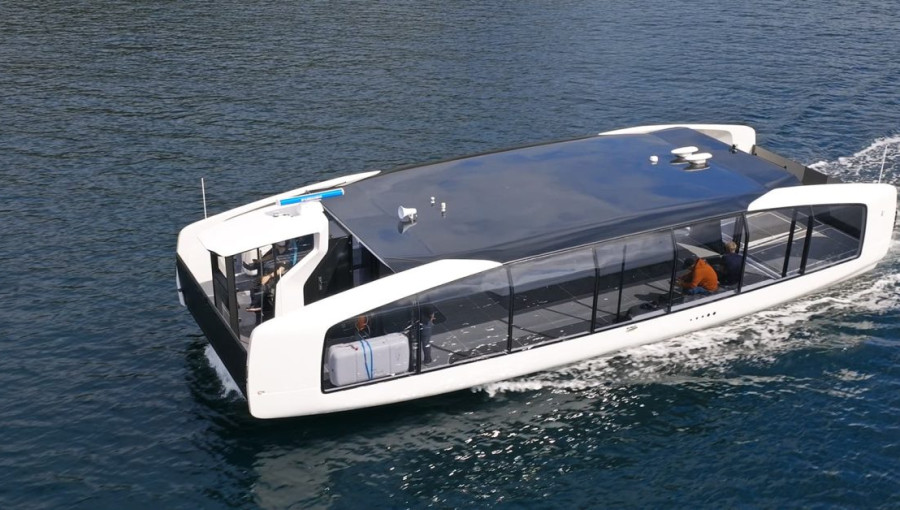
A successful 14-month pilot program in Fredrikstad, Norway, has demonstrated that small-scale electric ferries can serve as a viable and cost-effective alternative to expensive urban infrastructure like bridges and tunnels. The Hyke F-15, a 15-meter electric shuttle, transported over 41,000 passengers across a river with 88% higher energy efficiency than diesel counterparts. This project highlights how modern electric marine technology can revitalize urban waterways, offering a scalable, low-emission solution for city transit that requires minimal permanent construction while maintaining high passenger satisfaction and operational reliability.
Norwegian marine technology firm Hyke recently concluded an extensive real-world trial of its F-15 electric shuttle, proving that water-based transit can outperform traditional land-based infrastructure in specific urban settings. Operating in the city of Fredrikstad from April 2024 through mid-2025, the vessel completed thousands of short-range trips across a 225-meter river segment. The 15-meter boat, designed specifically for high-frequency urban crossings, managed to carry up to 50 passengers per trip, completing each transit in roughly two minutes.
The trial’s data revealed staggering efficiency gains compared to conventional maritime transport. The F-15 consumed 88% less energy than traditional diesel-powered vessels of a similar size. During operation, the ferry’s average power draw was approximately 10 kW—a figure comparable to the energy used by five household hair dryers. This remarkable efficiency is supported by a 196 kWh battery pack, which allows for up to 10 hours of continuous service. To ensure the vessel remains viable for rigorous daily schedules, it supports 150 kW DC fast charging.
Beyond technical performance, the project underscores a potential shift in urban planning philosophy. Hyke CEO Halvor Vislie noted that utilizing existing waterways can bypass the need for massive financial investments in tunnels or bridges. Because these ferries can be deployed rapidly and adapted to changing demand, they offer a level of flexibility that fixed infrastructure cannot match. The pilot reported zero safety incidents and a high passenger satisfaction rating of 4.72 out of 5, suggesting strong public acceptance for integrated electric water transit.
Hyke’s approach has attracted significant interest from major industry investors, including Ocean Zero LLC. Led by TED’s Chris Anderson, the investment firm also backs the high-speed hydrofoil manufacturer Candela. While Candela focuses on long-distance, high-speed marine travel, Hyke targets the short-range, high-frequency urban sector. By proving that electric boats can compete with land-based infrastructure on both cost and efficiency, the Fredrikstad pilot sets a new benchmark for sustainable metropolitan mobility and the future of “blue” city transit.