US Solar Firms Push Perovskite Technology Toward Commercialization
The American solar industry is reaching a pivotal moment in the commercialization of perovskite-silicon tandem technology. California-based Tandem PV has launched a commercial demonstration facility in Fremont, while Caelux has secured a major production partnership with Solx. These developments aim to push solar module efficiency beyond the limits of traditional silicon, with claims of conversion rates nearing 30%. By establishing domestic manufacturing and supply chains, these firms are transitioning perovskite technology from laboratory research to large-scale, viable energy solutions.
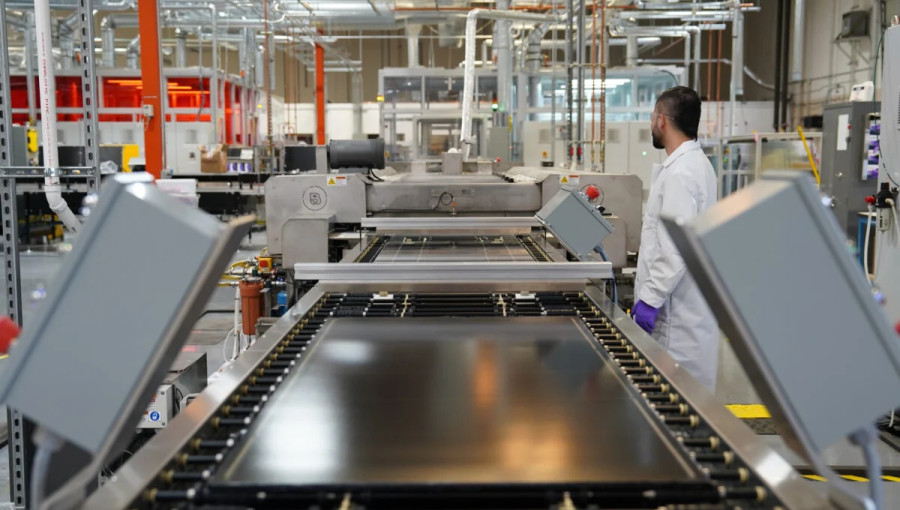
Tandem PV recently inaugurated its 6,038-square-meter production site in Fremont, California. This facility features a 40MW annual nameplate capacity production line dedicated to commercial-format silicon-perovskite tandem modules. Internal testing by the company indicates a light conversion efficiency rate of 29.7%, with annual power degradation levels remaining below 1%. These performance metrics allow the startup to target a 25-year operational lifespan, aligning with current utility-scale industry standards and product warranties.
The company plans to distribute these modules for validation trials later this year, with an objective to reach high-volume manufacturing by 2028. CEO Scott Wharton emphasized that the factory represents a shift from experimental results to repeatable, commercial-scale production, signaling a resurgence in American solar engineering leadership through the breakthrough innovation typical of Silicon Valley.
Simultaneously, Caelux has entered a five-year partnership with Puerto Rican module manufacturer Solx to deliver US-made perovskite-silicon modules. Unlike traditional tandem cells, Caelux utilizes a "hybrid tandem" approach by coating solar glass with perovskite materials, which is then integrated into a standard solar module. This method is expected to achieve conversion efficiencies of up to 28%. The collaboration, which includes silicon cells from US-based Suniva, aims for a total production of 3GW through Solx’s Aurora module series.
This partnership is designed to establish a robust, fully domestic supply chain. By integrating Caelux’s "Active Glass" with domestically produced solar cells, the companies intend to bolster energy security and foster high-quality job creation within the United States. Caelux leadership noted that this agreement represents a firm production deal with significant volume and purchase commitments, distinguishing it from typical industry licensing arrangements.
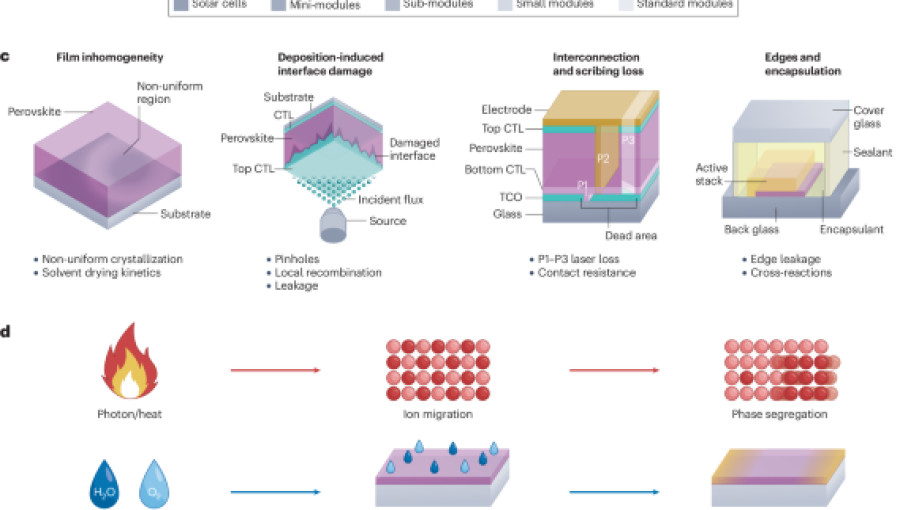
The broader solar industry has long pursued the potential of perovskite-silicon tandem technology due to its ability to absorb a wider spectrum of light compared to standard crystalline silicon. While British firm Oxford PV became the first to sell commercial units in 2024, US firms are now closing the gap. Despite historical concerns regarding the volatility and moisture sensitivity of perovskite materials, industry roadmaps suggest that tandem modules could enter mass production globally by 2027, eventually capturing a significant share of the market.